


Share
Introduction
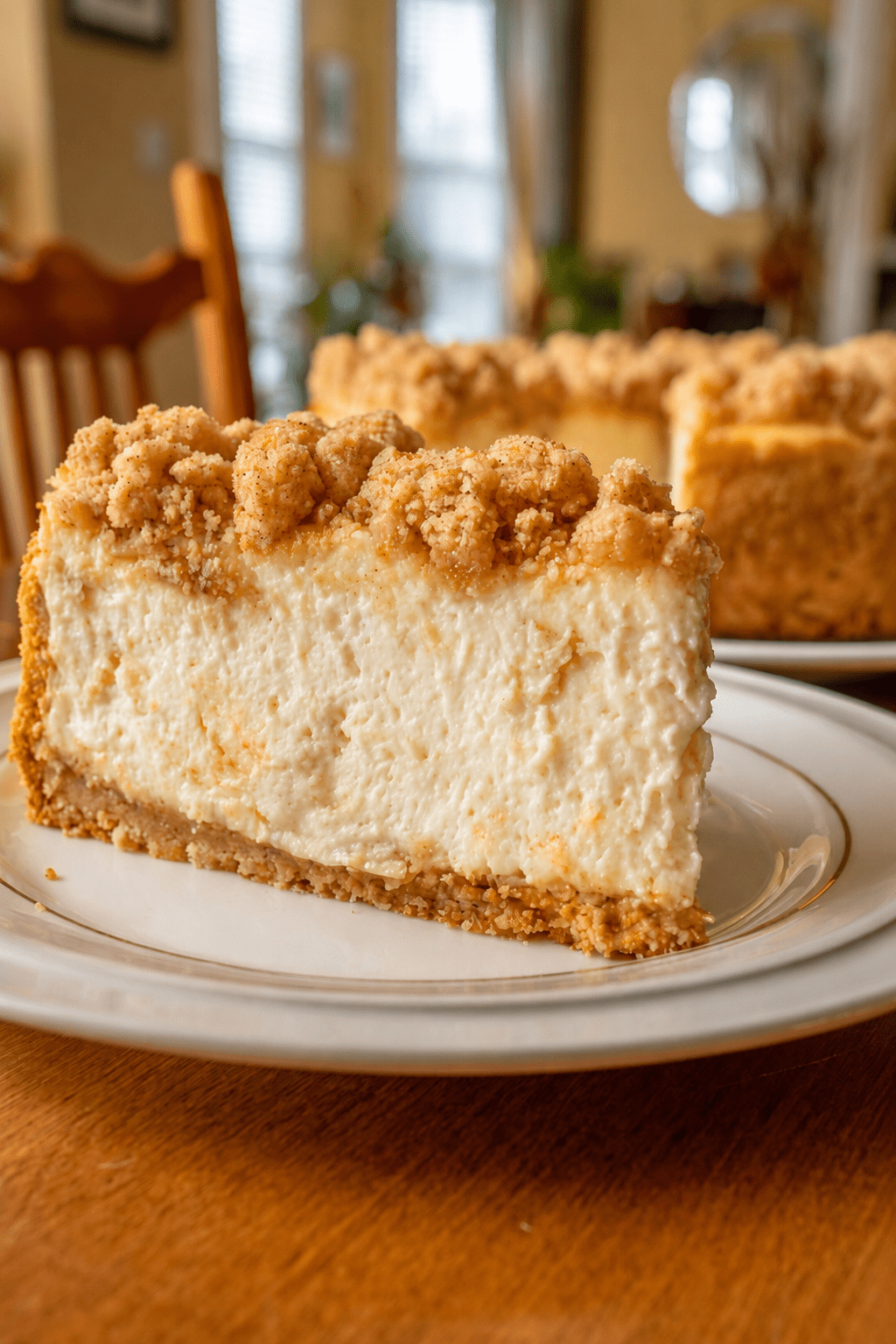
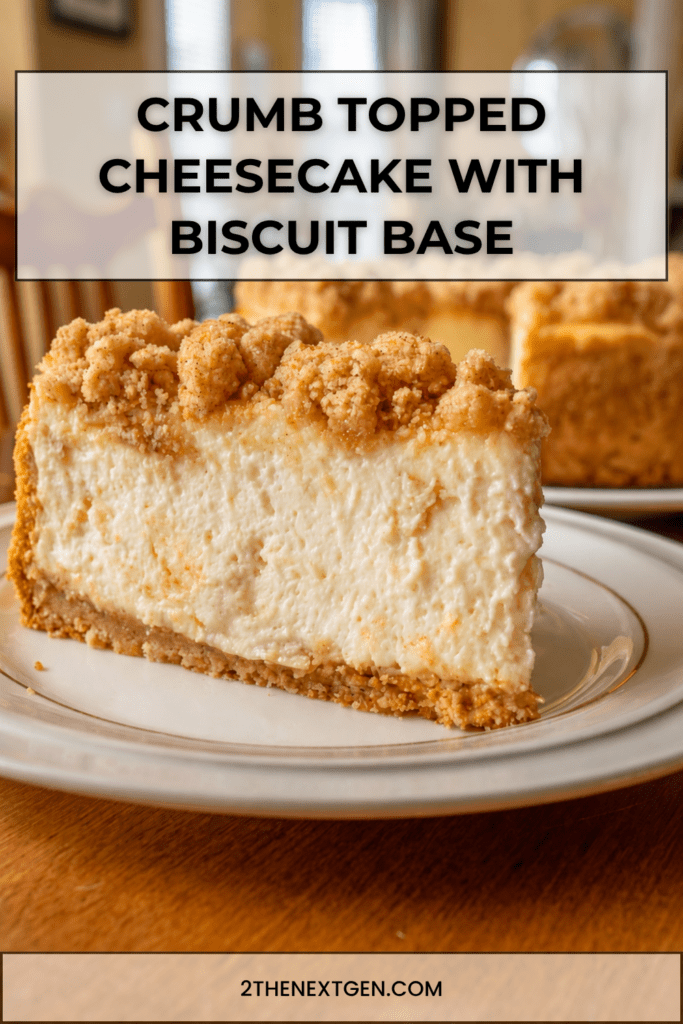
Crumb Topped Cheesecake is a rich, creamy and comforting dessert that combines everything people love about classic cheesecake with the irresistible texture of a golden crumble topping. It has a crunchy biscuit base, a smooth vanilla cheesecake filling and a buttery crumb layer that bakes beautifully on top.
Moreover, this cheesecake is perfect when you want a dessert that feels familiar but still a little special. The biscuit crust gives a crisp foundation, the cream cheese filling brings richness and softness, and the crumble adds a sweet, slightly crunchy finish. As a result, each slice has a delicious contrast of textures.
In addition, this recipe is ideal for many occasions. You can serve it for birthdays, holidays, family dinners, weekend baking or coffee time. It is also a great make-ahead dessert because it needs to chill before serving, which means you can prepare it the day before and enjoy a perfectly set cheesecake the next day.
This Crumb Topped Cheesecake is simple to prepare, even though it looks impressive. With basic ingredients such as cream cheese, biscuits, butter, sugar, eggs and flour, you can create a dessert that tastes homemade, generous and satisfying.
History and Information About Crumb Topped Cheesecake
Cheesecake is one of the oldest and most beloved desserts in the world. Many versions exist, from baked cheesecakes with dense, creamy fillings to lighter no-bake cheesecakes served chilled. Over time, home bakers have created countless variations by adding fruit, chocolate, caramel, nuts or crumb toppings.
The idea of adding a crumble topping comes from classic crumb cakes and fruit crumbles. A crumble is usually made with flour, sugar and cold butter, rubbed together until it forms small pieces. When baked, these crumbs become golden, buttery and slightly crisp. Therefore, adding crumble to cheesecake creates a beautiful contrast with the smooth filling.
Furthermore, the biscuit base is another important part of this dessert. Digestive biscuits or graham crackers are often used because they have a mild sweetness and crumbly texture. When mixed with melted butter and pressed into a pan, they form a stable crust that pairs perfectly with the creamy filling.
Today, Crumb Topped Cheesecake is loved because it feels both classic and comforting. It offers the richness of traditional cheesecake while adding a rustic bakery-style topping. Because of this combination, it is an excellent dessert for anyone who enjoys creamy cakes with a crunchy finish.
Ingredients
For 8 servings:
For the base:
- 200 g digestive biscuits or graham crackers
- 80 g melted butter
- 1 tablespoon sugar, optional
For the cheesecake filling:
- 600 g cream cheese
- 150 g sugar
- 3 eggs
- 150 ml heavy cream or sour cream
- 1 teaspoon vanilla extract
- 1 tablespoon flour or cornstarch
- & 1 pinch of salt
For the crumble topping:
- 80 g flour
- 50 g sugar
- 50 g cold butter, cubed
- 1/2 teaspoon cinnamon, optional
Preparation Step by Step
Step 1: Prepare the Springform Pan
First, prepare a springform pan by lining the bottom with parchment paper. This makes it easier to remove the cheesecake after it has chilled. If desired, lightly grease the sides of the pan to help the cheesecake release more cleanly.
A springform pan is ideal for cheesecake because the removable sides allow you to unmold the dessert without damaging the edges. Since this cheesecake has both a base and a crumble topping, a stable pan is important for a neat final result.
Step 2: Crush the Biscuits
Next, crush the digestive biscuits or graham crackers into fine crumbs. You can do this in a food processor, or you can place the biscuits in a sealed bag and crush them with a rolling pin.
The crumbs should be fine and even, because this helps the base hold together properly. If some pieces are too large, the crust may crumble when sliced. Therefore, take a moment to make sure the texture is similar to coarse sand.
Step 3: Mix the Biscuit Base
Place the biscuit crumbs in a bowl and add the melted butter. Add the optional tablespoon of sugar if you want a slightly sweeter crust. Mix everything together until the texture looks like wet sand.
The butter helps bind the crumbs and gives the base a rich flavor. When the mixture is ready, it should hold together slightly when pressed between your fingers. If it feels too dry, you can add a small extra spoonful of melted butter.
Step 4: Press the Base Into the Pan
Pour the biscuit mixture into the prepared springform pan. Press it firmly into the bottom using the back of a spoon or the base of a glass.
Try to create an even layer so the cheesecake sits neatly on top. A firmly packed crust will slice better after chilling. Once the base is pressed down, place the pan in the refrigerator while you prepare the filling.
Step 5: Preheat the Oven
Preheat the oven to 160°C. A moderate oven temperature is important for cheesecake because it allows the filling to bake slowly and evenly.
If the oven is too hot, the cheesecake may rise too quickly, crack or become dry around the edges. Therefore, baking at a lower temperature helps create a smoother and creamier texture.
Step 6: Beat the Cream Cheese and Sugar
In a large mixing bowl, beat the cream cheese with the sugar until smooth and creamy. Make sure the cream cheese is softened before mixing, as this helps prevent lumps in the filling.
Do not overbeat the mixture. The goal is to make it smooth, not airy. Too much air in the batter can cause the cheesecake to puff up while baking and then sink as it cools.
Step 7: Add the Eggs One at a Time
Next, add the eggs one at a time, mixing gently after each addition. This helps the eggs blend evenly into the cream cheese mixture.
Mix on low speed or stir by hand if possible. Gentle mixing is important because cheesecake should have a dense, creamy texture rather than a fluffy cake-like texture. Once the eggs are incorporated, the filling should look smooth and glossy.
Step 8: Add the Cream, Vanilla and Thickener
Now, add the heavy cream or sour cream, vanilla extract, flour or cornstarch and a pinch of salt. Mix gently until the filling is completely smooth.
Heavy cream gives the cheesecake a rich and silky texture, while sour cream adds a slight tang that balances the sweetness. The flour or cornstarch helps stabilize the filling so it sets nicely. Meanwhile, vanilla adds warmth and enhances the creamy flavor.
Step 9: Prepare the Crumble Topping
In a small bowl, mix the flour, sugar and cinnamon if using. Add the cold cubed butter and rub it into the dry ingredients with your fingertips until the mixture becomes crumbly.
The butter should stay cold so the crumble keeps its texture while baking. Some crumbs can be small, while others can be slightly larger. This variation creates a more rustic and crunchy topping.
Step 10: Pour the Filling Over the Base
Remove the chilled biscuit base from the refrigerator. Pour the cheesecake filling over the base and smooth the surface gently with a spatula.
Try not to tap the pan too hard, as this may disturb the crust. However, you can lightly smooth the top so the crumble will sit evenly on the filling.
Step 11: Add the Crumble Topping
Sprinkle the crumble topping evenly over the cheesecake filling. Cover the surface lightly, making sure the crumbs are spread across the top.
Do not press the crumble into the filling. It should sit gently on the surface so it can bake into a golden, slightly crisp layer. As the cheesecake bakes, the crumble will become buttery and fragrant.
Step 12: Bake the Cheesecake
Place the cheesecake in the preheated oven and bake at 160°C for 50 to 60 minutes. The edges should look set, while the center should still have a slight wobble.
This gentle wobble is important because the cheesecake will continue to set as it cools. If the center looks completely firm in the oven, the cheesecake may become overbaked. Therefore, remove it when it is just set around the edges.
Step 13: Cool the Cheesecake Slowly
After baking, turn off the oven and open the door slightly. Let the cheesecake cool inside the oven for about 30 minutes.
Cooling the cheesecake slowly helps reduce the risk of cracks and keeps the texture smooth. Sudden temperature changes can cause the filling to contract too quickly, so this step is very useful for a creamy result.
Step 14: Chill Before Slicing
Once the cheesecake has cooled slightly, remove it from the oven and let it come to room temperature. Then, cover it and refrigerate for at least 4 hours, preferably overnight.
Chilling is essential because it allows the filling to fully set. The flavor also improves as the cheesecake rests. For clean slices, use a sharp knife and wipe it between cuts.
Step 15: Serve the Cheesecake
Finally, remove the cheesecake from the springform pan and transfer it to a serving plate. Slice it carefully and serve chilled.
This cheesecake is delicious on its own, but you can also serve it with caramel sauce, berry sauce, coffee or a little whipped cream. The creamy filling and crunchy topping make each slice rich, smooth and satisfying.
Nutritional Information
Crumb Topped Cheesecake is a rich dessert made with cream cheese, biscuits, butter, eggs, cream and sugar. It provides carbohydrates from the biscuit base and crumble, fats from the butter and cream cheese, and protein from the eggs and dairy.
Approximate nutrition per serving may vary depending on the type of biscuits, cream cheese and cream used. Based on 8 servings, one slice generally contains around 430 to 560 calories. It may also provide approximately 8 to 12 g of protein, 35 to 45 g of carbohydrates and 28 to 40 g of fat.
Because this cheesecake is rich and creamy, it is best served in moderate portions. For a lighter version, you can use reduced-fat cream cheese, sour cream instead of heavy cream or a thinner layer of crumble. However, the classic version gives the best creamy texture and buttery flavor.
To balance the richness, serve the cheesecake with fresh berries or a simple fruit sauce. The acidity of the fruit pairs beautifully with the creamy filling and sweet crumble topping.
FAQ
Can I Make Crumb Topped Cheesecake Ahead of Time?
Yes, this cheesecake is perfect for making ahead. In fact, it tastes better after chilling for several hours or overnight. Prepare it the day before serving, keep it covered in the refrigerator and slice it when fully set.
Why Is My Cheesecake Center Still Wobbly?
A slightly wobbly center is normal when the cheesecake comes out of the oven. It will continue to set as it cools and chills. However, the edges should be set, and the center should not look liquid.
How Do I Prevent Cheesecake From Cracking?
To prevent cracks, avoid overbeating the filling, bake at a moderate temperature and cool the cheesecake slowly in the oven with the door slightly open. Also, do not overbake it, because a dry cheesecake is more likely to crack.
Can I Use Sour Cream Instead of Heavy Cream?
Yes, sour cream works very well in this recipe. It adds a light tangy flavor and helps create a creamy texture. Heavy cream makes the cheesecake richer, while sour cream gives it a slightly fresher taste.
Can I Add Fruit to This Cheesecake?
Yes, you can add fruit, but it is best to use fruit as a topping or sauce after baking. Berry sauce, caramelized apples or cherry topping pair beautifully with the crumble. Adding too much fruit inside the filling may change the texture and baking time.
Can I Freeze Crumb Topped Cheesecake?
Yes, you can freeze this cheesecake. Let it cool and chill completely first, then wrap it tightly and freeze for up to 2 months. Thaw it overnight in the refrigerator before serving. The crumble may soften slightly after freezing, but the cheesecake will still taste delicious.
What Biscuits Work Best for the Base?
Digestive biscuits and graham crackers are both excellent choices. Digestive biscuits give a slightly buttery and mild flavor, while graham crackers add a classic cheesecake taste. You can also use speculoos biscuits for a spiced flavor.
How Long Should Cheesecake Chill Before Serving?
The cheesecake should chill for at least 4 hours, but overnight is best. A longer chill helps the filling become firm, smooth and easy to slice. It also allows the flavors to develop fully.
Conclusion
Crumb Topped Cheesecake is a rich, creamy and comforting dessert with a crunchy biscuit base, smooth vanilla filling and golden buttery crumble. It combines the elegance of cheesecake with the cozy texture of a crumb cake, making it perfect for both casual family meals and special occasions.
Moreover, this cheesecake can be made ahead, served chilled and paired with caramel sauce, berry sauce, coffee or whipped cream. With its creamy center and crisp topping, it is a dessert that feels generous, homemade and satisfying. Therefore, if you are looking for a cheesecake recipe with extra texture and flavor, this Crumb Topped Cheesecake is a perfect choice to bake and share.
Check also:
Lemon Chicken Ricotta Meatballs
Chicken and meat easy Recipes
Suggestions:
- Fluffy Cheese Soufflé Omelette Recipe
- Creamy Broccoli Pesto Spaghetti with Parmesan and Almonds
- Easy Vegetable Rolled Omelet for Healthy Lunchboxes
- Easy Layered Mason Jar Salad for Healthy School Lunches
- Fudgy Banana Brownie Bites with Cocoa and Nut Butter