


Share
Introduction
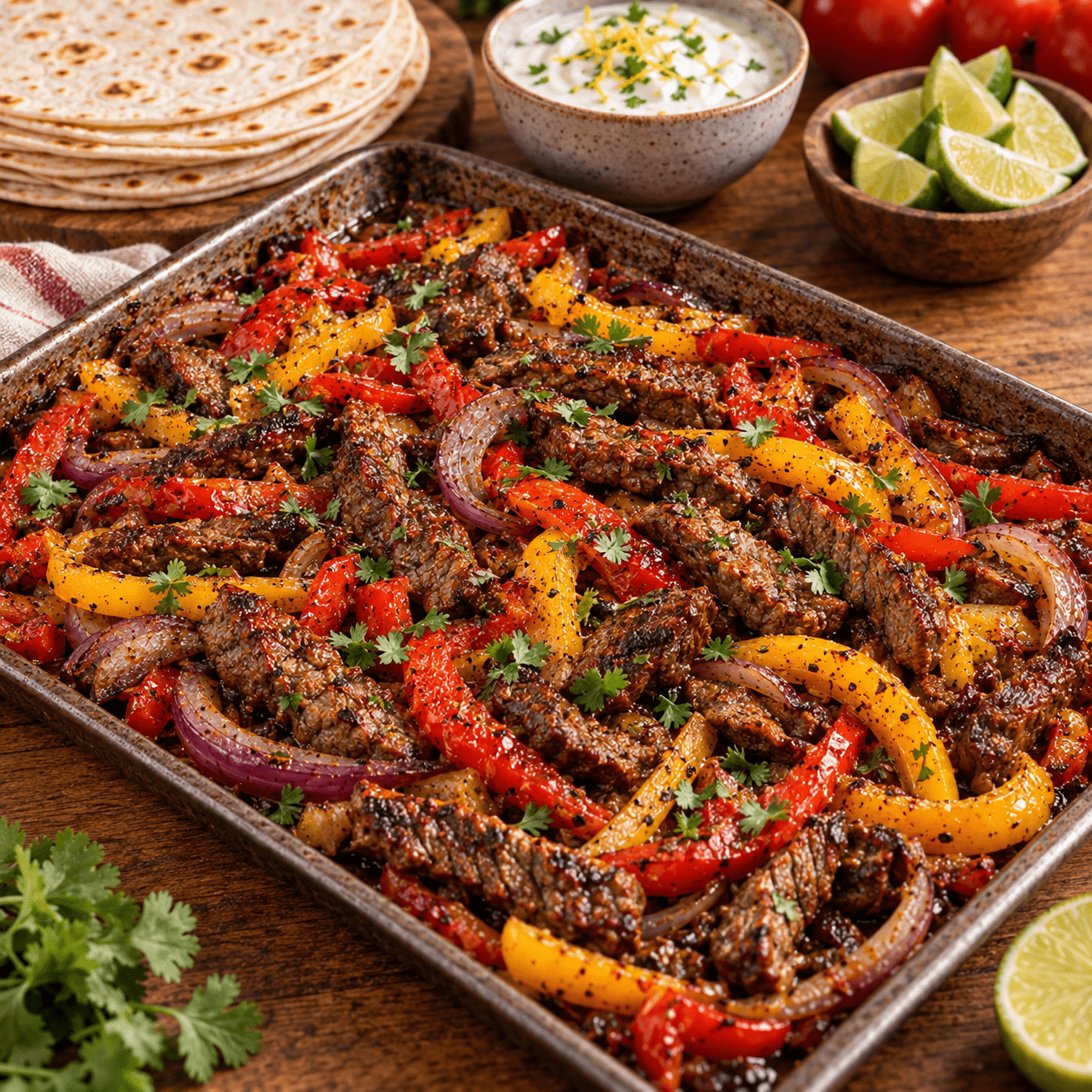
If you love the bold flavors of fajitas but want a simpler way to prepare them, this sheet pan fajita-style beef recipe is an excellent option. Instead of cooking everything separately in a skillet, the beef, peppers, and onions are roasted together in the oven for an easy and satisfying meal.
The result is tender strips of beef, lightly caramelized vegetables, warm tortillas, and a creamy lemon sauce that adds freshness to every bite. Furthermore, because most of the cooking takes place on one baking sheet, cleanup is much easier than with traditional stovetop fajitas.
This recipe is especially useful for busy weeknights because it requires only a few basic ingredients and very little active cooking time. Once the vegetables are sliced and seasoned, the oven does most of the work.
In addition, the recipe is easy to customize. You can use different colors of bell peppers, add extra spices, include fresh herbs, or serve the beef with additional toppings such as avocado, shredded cheese, salsa, or lettuce.
Whether you serve it for a casual family dinner, a quick lunch, or a relaxed weekend meal, this sheet pan fajita-style beef is both practical and full of flavor.
What Is Sheet Pan Fajita-Style Beef?
Sheet pan fajita-style beef is a simplified oven-baked version of classic beef fajitas.
Traditional fajitas are usually cooked quickly over high heat, often in a cast-iron skillet or on a hot griddle. The meat is sliced into thin strips and combined with onions and bell peppers. Everything is then served with tortillas and various toppings.
In this version, however, the ingredients are spread across a large baking sheet and roasted in the oven. This method allows the peppers and onions to soften and caramelize while the beef cooks quickly at a high temperature.
As a result, you still get the familiar combination of juicy beef, sweet peppers, savory onions, and warm spices, but with a much simpler preparation process.
Paprika provides warmth and depth, while olive oil helps the vegetables roast properly and keeps the beef tender.
Finally, the lemon cream sauce introduces a fresh and slightly tangy contrast to the rich beef.
A Brief History and Inspiration Behind Fajitas
Fajitas have roots in Tex-Mex cuisine and are strongly associated with the food traditions of Texas and northern Mexico.
The word “fajita” comes from the Spanish word “faja,” meaning belt or strip. Originally, the term referred specifically to skirt steak, which was often cut into strips and cooked over high heat.
Historically, fajitas were closely connected to ranch culture in Texas, where less expensive cuts of beef were cooked over open fires and served simply.
Over time, the dish became increasingly popular in restaurants throughout the United States. Eventually, the word fajita came to describe not only skirt steak but also a broader style of dish made with sliced meat, peppers, onions, tortillas, and toppings.
Today, fajitas can be made with beef, chicken, shrimp, or vegetables.
This sheet pan version takes inspiration from those classic flavors while adapting the cooking method for a modern kitchen. Instead of standing over a hot skillet, you can roast everything in the oven, making the recipe easier to manage and ideal for home cooking.
Ingredients for Sheet Pan Fajita-Style Beef
This recipe uses simple ingredients that work together to create a balanced and flavorful meal.
- 400 g thinly sliced beef
- 2 bell peppers
- 1 large onion
- 2 teaspoons paprika
- 2 tablespoons olive oil
- 6 small tortillas
- 100 g thick cream or crème fraîche
- 1 tablespoon lemon juice
- 1 pinch salt
- 1 pinch black pepper
You can use any combination of red, yellow, orange, or green bell peppers.
For the beef, choose a cut that cooks quickly and can be sliced thinly. Sirloin, flank steak, skirt steak, or tender beef strips all work well.
How to Make Sheet Pan Fajita-Style Beef
Step 1: Preheat the Oven
First, preheat your oven to 220°C, or approximately 425°F.
A high oven temperature is important for this recipe because it helps the vegetables roast instead of steaming. It also allows the beef to cook quickly while remaining tender.
Prepare a large baking sheet before you begin assembling the ingredients.
Step 2: Slice the Peppers and Onion
Cut the bell peppers into thin strips.
Then, peel the onion and slice it into similarly thin pieces.
Keeping the vegetables relatively uniform in size helps them cook evenly. Moreover, thin slices develop lightly caramelized edges more quickly at high heat.
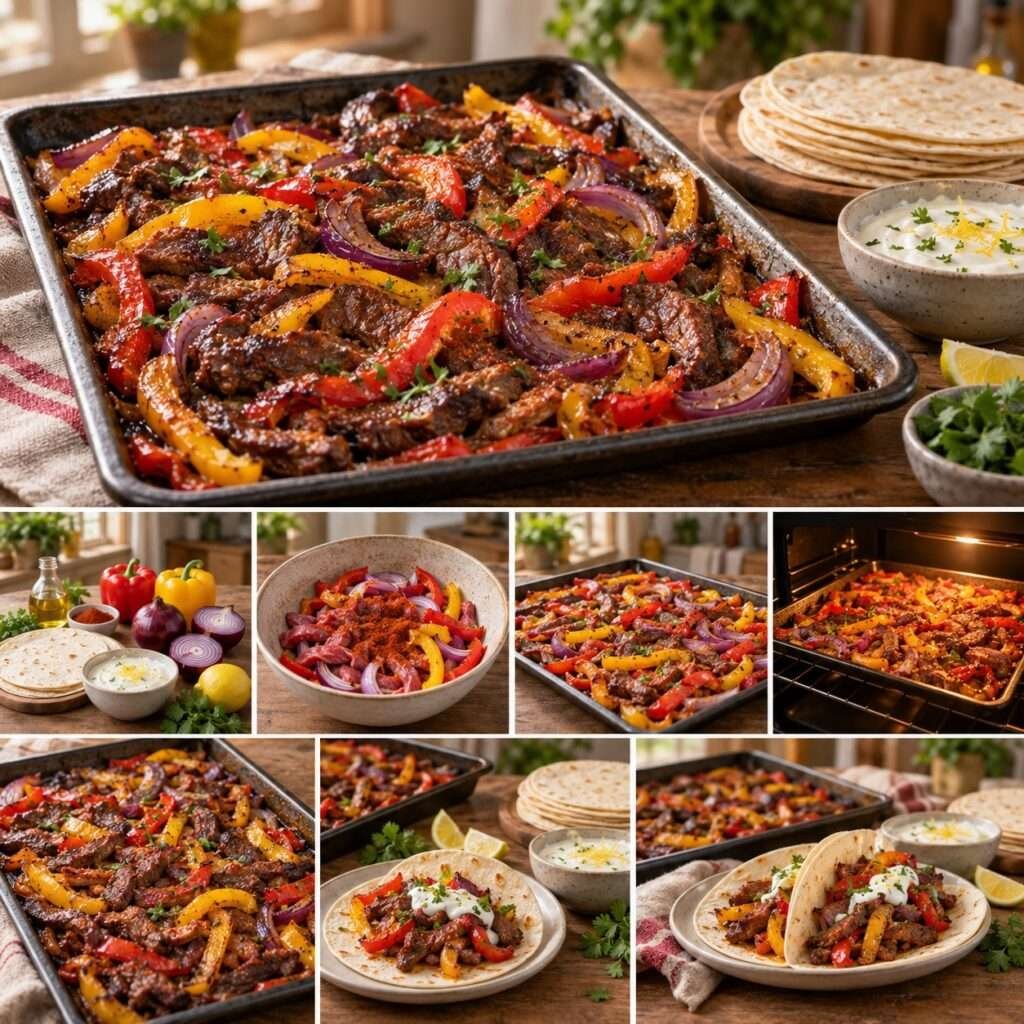
Spread the sliced peppers and onion across the baking sheet.
Step 3: Season the Vegetables
Drizzle the vegetables with half of the olive oil.
Then sprinkle over half of the paprika.
Add a small pinch of salt and toss everything together directly on the baking sheet.
Make sure the vegetables are spread out rather than piled into one area. This gives them enough room to roast properly.
Step 4: Roast the Vegetables
Place the baking sheet in the preheated oven.
Roast the peppers and onion for approximately 10 minutes.
During this time, the vegetables will begin to soften while their edges develop some color.
Because the beef cooks more quickly than the vegetables, starting the vegetables first ensures everything finishes at roughly the same time.
Step 5: Season the Beef
While the vegetables are roasting, place the sliced beef in a bowl.
Add the remaining olive oil and paprika.
Season with salt and black pepper, then toss until all of the beef strips are lightly coated.
For additional flavor, you can also add a little cumin, garlic powder, chili powder, or smoked paprika.
Step 6: Add the Beef to the Baking Sheet
After the vegetables have roasted for 10 minutes, carefully remove the tray from the oven.
Add the seasoned beef strips directly to the vegetables.
Spread the beef out as evenly as possible.
Avoid placing all the meat in one thick pile because overcrowding can cause it to steam instead of roast.
Step 7: Finish Roasting
Return the tray to the oven.
Cook for another 8 to 10 minutes, depending on how thinly the beef is sliced and how well done you prefer it.
Very thin pieces may cook faster, while slightly thicker strips may require a few extra minutes.
Check the beef toward the end of the cooking time to avoid overcooking it.
Once the meat is cooked and the vegetables are tender, remove the tray from the oven.
Step 8: Prepare the Lemon Cream Sauce
While the beef finishes cooking, prepare the sauce.
Place the thick cream or crème fraîche in a small bowl.
Add the lemon juice and stir until smooth.
The acidity of the lemon helps balance the richness of the cream while also complementing the savory beef.
You can also add a little salt, black pepper, or chopped fresh herbs if desired.
Step 9: Warm the Tortillas
Warm the tortillas just before serving.
You can heat them briefly in a dry skillet, wrap them in foil and place them in the oven, or warm them in the microwave for a few seconds.
Warm tortillas are softer, more flexible, and much easier to fold around the filling.
Step 10: Assemble the Fajitas
Place a warm tortilla on a plate.
Add a portion of roasted beef, peppers, and onions.
Then spoon a little lemon cream sauce over the filling.
Fold the tortilla around the ingredients and serve immediately.
Tips for the Best Sheet Pan Beef Fajitas
The first important tip is to slice the beef thinly.
Thin pieces cook quickly and remain more tender. Whenever possible, slice the beef against the grain because this shortens the muscle fibers and improves the texture.
Another important tip is to avoid overcrowding the baking sheet. If everything is packed too tightly, moisture becomes trapped and the ingredients may steam rather than roast.
Therefore, use a large tray and spread the vegetables and beef into an even layer.
You should also avoid overcooking the beef. Since the oven temperature is high, the meat can cook surprisingly quickly.
Finally, taste the filling before serving and adjust the seasoning if necessary. A little additional salt, lemon juice, or paprika can make a noticeable difference.
What to Serve with Beef Fajitas
These sheet pan beef fajitas are satisfying on their own, but they also pair well with many side dishes.
For a more complete meal, serve them with rice, black beans, corn, or a simple green salad.
You can also offer additional toppings such as sliced avocado, guacamole, salsa, grated cheese, chopped tomatoes, cilantro, or jalapeños.
If you want something fresh and crunchy, shredded lettuce or cabbage works particularly well.
Furthermore, lime or lemon wedges can be served on the side so everyone can add extra acidity to their fajitas.
For larger gatherings, place all the ingredients on the table and let each person build their own tortilla.
Nutritional Information
The exact nutritional values will vary depending on the cut of beef, type of tortillas, cream, and portion size.
However, this recipe provides a good balance of protein, carbohydrates, vegetables, and fats.
Beef is a rich source of protein and also provides nutrients such as iron, vitamin B12, zinc, and selenium.
Bell peppers contain vitamin C and other antioxidants, while onions contribute additional plant compounds.
Olive oil provides unsaturated fats, and tortillas supply carbohydrates for energy.
For approximately three servings, one serving may contain around:
- 500–600 calories
- 30–35 g protein
- 40–50 g carbohydrates
- 25–30 g fat
- 4–6 g dietary fiber
These figures are approximate and will change based on the exact ingredients and portion sizes used.
Frequently Asked Questions About Sheet Pan Beef Fajitas
What Is the Best Beef for Fajitas?
Several cuts of beef work well for fajitas.
Skirt steak and flank steak are traditional options because they are flavorful and easy to slice into strips.
Sirloin is another excellent choice because it is tender and widely available.
Whatever cut you choose, slice it thinly and preferably against the grain for the best texture.
Can I Make This Recipe Ahead of Time?
Yes, you can prepare several parts of the recipe in advance.
The peppers and onion can be sliced and stored in the refrigerator.
The beef can also be sliced and seasoned several hours before cooking.
However, for the best texture, roast everything shortly before serving.
Can I Use Chicken Instead of Beef?
Yes.
Thinly sliced chicken breast or chicken thighs can be used instead of beef.
However, the cooking time may need to be adjusted. Always make sure the chicken is fully cooked before serving.
Can I Use Different Spices?
Absolutely.
Paprika keeps the recipe simple, but you can easily add more classic fajita flavors.
For example, try cumin, chili powder, garlic powder, onion powder, oregano, smoked paprika, or cayenne pepper.
A premixed fajita seasoning blend can also be used.
Can I Make These Beef Fajitas Spicy?
Yes.
Add chili powder, cayenne pepper, crushed chili flakes, or sliced jalapeños to increase the heat.
Alternatively, serve hot sauce at the table so each person can adjust the spice level.
Can I Use Greek Yogurt Instead of Cream?
Yes.
Greek yogurt is a good substitute for crème fraîche or thick cream.
It creates a lighter sauce while still providing a creamy texture.
Mix it with lemon juice in the same way and adjust the seasoning to taste.
How Do I Keep the Beef Tender?
The easiest way to keep the beef tender is to slice it thinly and avoid overcooking it.
Additionally, cutting against the grain can significantly improve the texture.
Using a naturally tender cut such as sirloin can also help.
Can I Add More Vegetables?
Certainly.
Mushrooms, zucchini, corn, or thinly sliced carrots can all be added.
However, keep in mind that different vegetables may require slightly different cooking times.
How Should I Store Leftovers?
Allow the beef and vegetables to cool before transferring them to an airtight container.
Store them in the refrigerator for up to three days.
Keep the sauce and tortillas separate for the best texture.
When ready to eat, reheat the beef and vegetables in a skillet, oven, or microwave.
Can I Make This Recipe Without Tortillas?
Yes.
You can serve the roasted beef and vegetables over rice, quinoa, couscous, or salad instead.
This also turns the recipe into an easy fajita bowl.
Conclusion
This sheet pan fajita-style beef is an easy way to enjoy bold, comforting flavors without spending too much time at the stove.
With tender beef strips, roasted bell peppers, sweet onions, warm paprika, soft tortillas, and creamy lemon sauce, every component works together to create a flavorful and satisfying meal.
Moreover, the sheet pan method keeps the preparation simple. The vegetables begin roasting first, the seasoned beef is added afterward, and everything finishes together with very little effort.
Because the recipe is so adaptable, it can easily be adjusted according to your preferences. Add extra spices, change the toppings, use different vegetables, or replace the tortillas with rice for a completely different presentation.
Most importantly, this recipe is practical enough for a weekday dinner while still being enjoyable enough to serve to family or guests. If you are looking for a quick beef dinner with plenty of flavor and minimal cleanup, these sheet pan beef fajitas are definitely worth adding to your regular meal rotation.
Check also:
Lemon Chicken Ricotta Meatballs
Chicken and meat easy Recipes
Suggestions:
- Sheet Pan Fajita-Style Beef with Roasted Peppers
- Curry Lentil Meatballs with Creamy Lemon Yogurt Sauce
- Fluffy Cheese Soufflé Omelette Recipe
- Creamy Broccoli Pesto Spaghetti with Parmesan and Almonds
- Easy Vegetable Rolled Omelet for Healthy Lunchboxes