


Share
Introduction
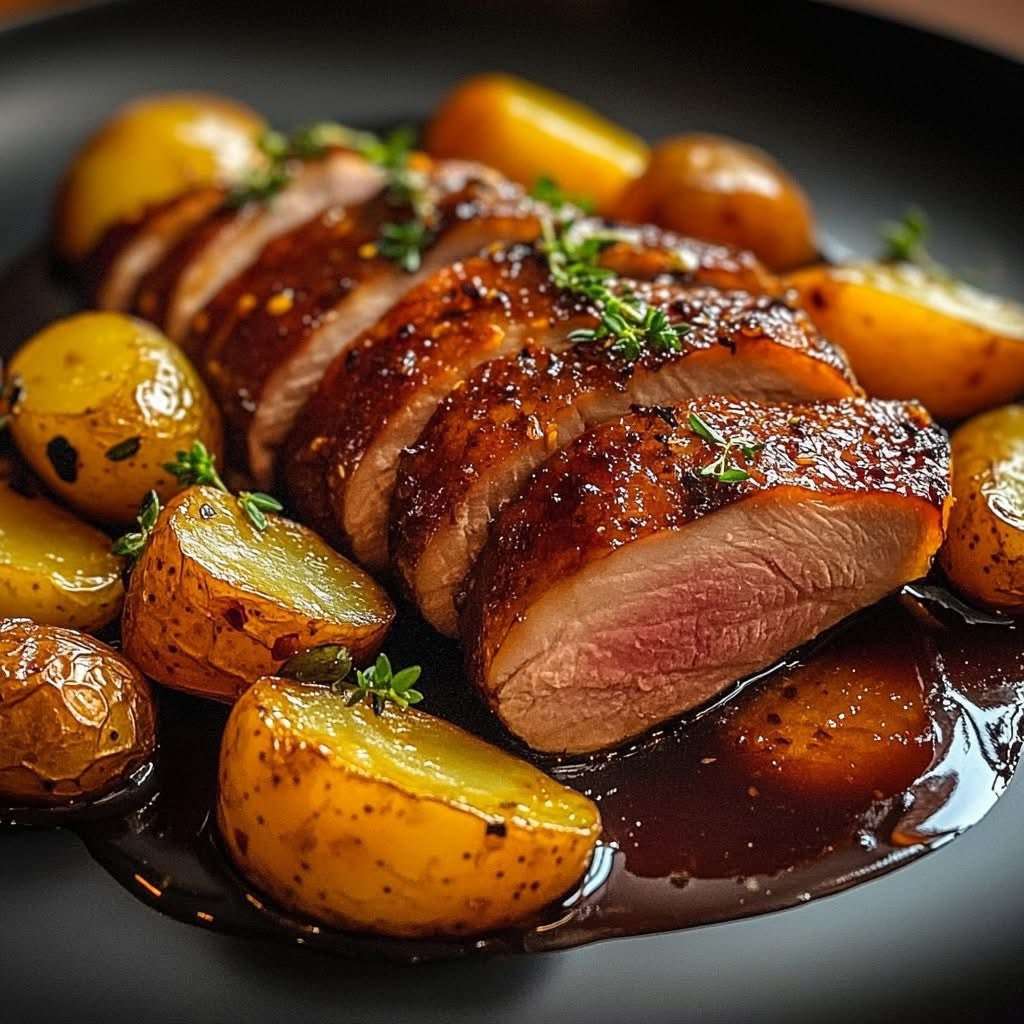
Honey-Glazed Duck Breast with Roasted Potatoes is an elegant and flavorful dish that beautifully balances sweetness, richness and savory depth. Duck breast is naturally tender and luxurious, and when paired with a glossy honey glaze and crisp golden potatoes, it becomes a restaurant-quality meal suited for special evenings, celebrations or elevated weeknight dinners. Although duck may seem complex to prepare, this recipe breaks the process down into simple steps that ensure perfect results every time.
What makes this dish particularly enjoyable is the contrast of textures. The duck skin becomes crispy as the fat renders slowly in the pan, while the honey marinade caramelizes into a glossy coating that enhances both color and flavor. At the same time, the roasted potatoes provide warmth and comfort, with thyme adding a fragrant Mediterranean touch. Furthermore, the marinade adds a subtle acidity from balsamic vinegar and a savory note from soy sauce, creating a glaze that is both balanced and irresistible.
This recipe is straightforward and highly rewarding, making it ideal for anyone who wants to elevate their cooking without excessive effort. With proper technique and timing, you can create a refined meal that tastes as impressive as it looks.
History and Background of the Recipe
Duck has been enjoyed across many cultures for centuries, especially in French, Chinese and Mediterranean cuisines. Its naturally rich meat pairs exceptionally well with sweet and acidic flavors, which explains why honey-glazed duck has become a beloved classic in modern cooking. Combining sweetness with the deep, savory notes of duck enhances its natural flavor, while the slight acidity from vinegar or fruit-based sauces adds brightness.
In traditional French cuisine, duck breast—known as magret de canard—is often served with sweet reductions such as honey, orange, or berry-based sauces. The technique of rendering duck fat slowly in a cold pan is a hallmark of French cooking, ensuring crispy skin and succulent meat. Meanwhile, Asian-inspired elements such as soy sauce contribute umami, creating a bridge between culinary traditions.
Roasted potatoes make a natural pairing for duck because they absorb flavors well and bring a comforting balance to the richness of the meat. Baby potatoes, in particular, are ideal due to their tender texture and ability to crisp beautifully when sautéed with olive oil or duck fat.
This recipe harmonizes these influences, offering a modern, refined yet approachable dish that reflects the versatility of duck while showcasing the simplicity of Mediterranean-style cooking.
Ingredients
- 1 duck breast (about 350 g)
- 400 g baby potatoes
- 2 tablespoons liquid honey
- 1 tablespoon balsamic vinegar
- 1 tablespoon soy sauce
- 2 sprigs fresh thyme
- 1 tablespoon olive oil
- Salt
- Freshly ground black pepper
Preparation
Step 1: Prepare the honey marinade
Begin by preparing the glaze. In a bowl, combine the liquid honey, balsamic vinegar and soy sauce. Whisk the mixture until smooth. Season lightly with salt and freshly ground pepper. Set the marinade aside while you prepare the duck. This mixture will become both the base of the glaze and the caramelized sauce used for finishing the dish.
Step 2: Score and season the duck breast
Place the duck breast skin-side up on a cutting board. Using a sharp knife, gently score the skin in a crisscross pattern, being careful not to cut through to the meat. Scoring helps the fat render evenly and promotes crispy skin. After scoring, season both sides generously with salt and black pepper.
Step 3: Render the fat and cook the duck
Place the duck breast skin-side down into a cold, dry pan. Starting with a cold pan allows the fat to render slowly and completely. Cook over medium heat for 8 to 10 minutes, allowing the skin to become golden and crisp. As the fat accumulates in the pan, you may spoon some out if necessary, but keep some for flavor.
Once the skin is well browned, flip the duck breast and cook for an additional 5 minutes on the meat side. The duck should be cooked to medium for the most tender texture. After cooking, remove the duck from the pan and brush it generously with the honey marinade. Let it rest briefly while you prepare the potatoes.
Step 4: Cook the roasted potatoes
Wash the baby potatoes thoroughly and cut them in half. In a separate pan, heat olive oil with the thyme sprigs. Add the potatoes and sauté them over medium heat for 15 to 20 minutes, stirring occasionally to ensure even browning. When the potatoes become golden, crisp and tender, season them with salt and pepper. Fresh thyme complements the potatoes beautifully and infuses them with aromatic depth.
Step 5: Caramelize the duck and finish the dish
Return the duck breast to the pan along with a small amount of the remaining marinade. Reduce the heat to low and allow the duck to caramelize for 2 to 3 minutes. This step adds shine and intensifies the flavor, creating a delicious glaze that adheres to the skin. Once caramelized, transfer the duck to a cutting board and slice it into thin, even pieces.
Step 6: Plate and serve
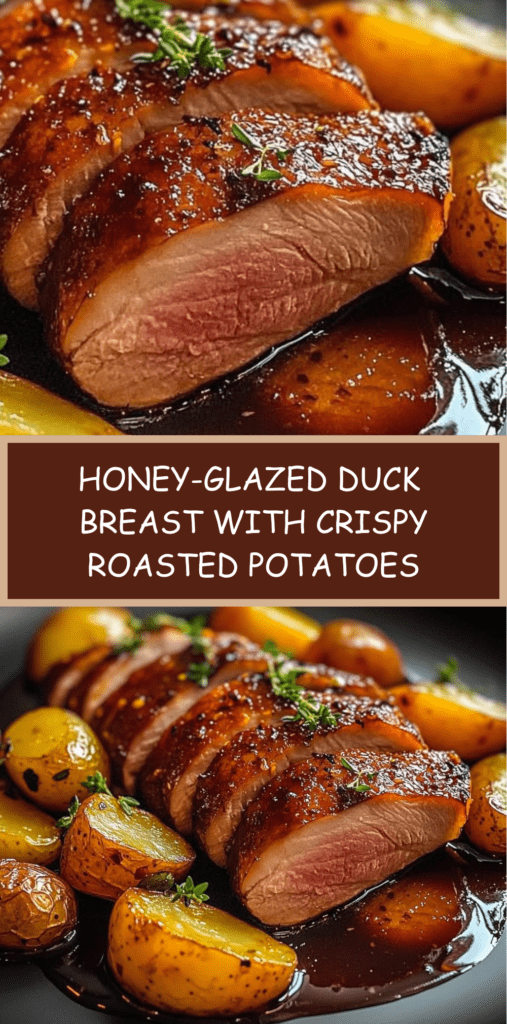
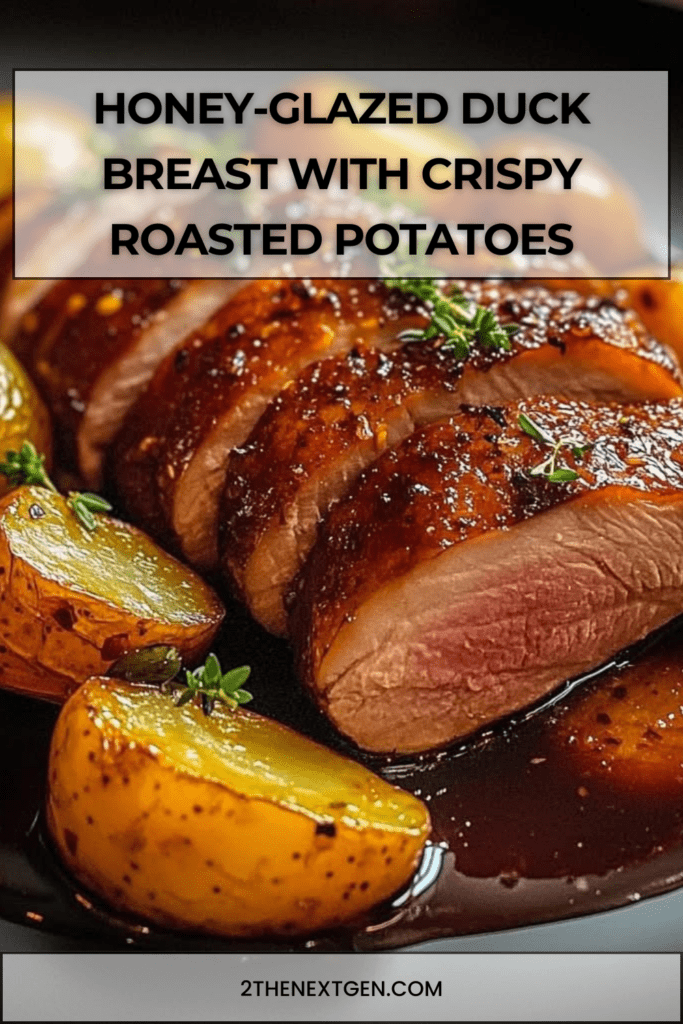
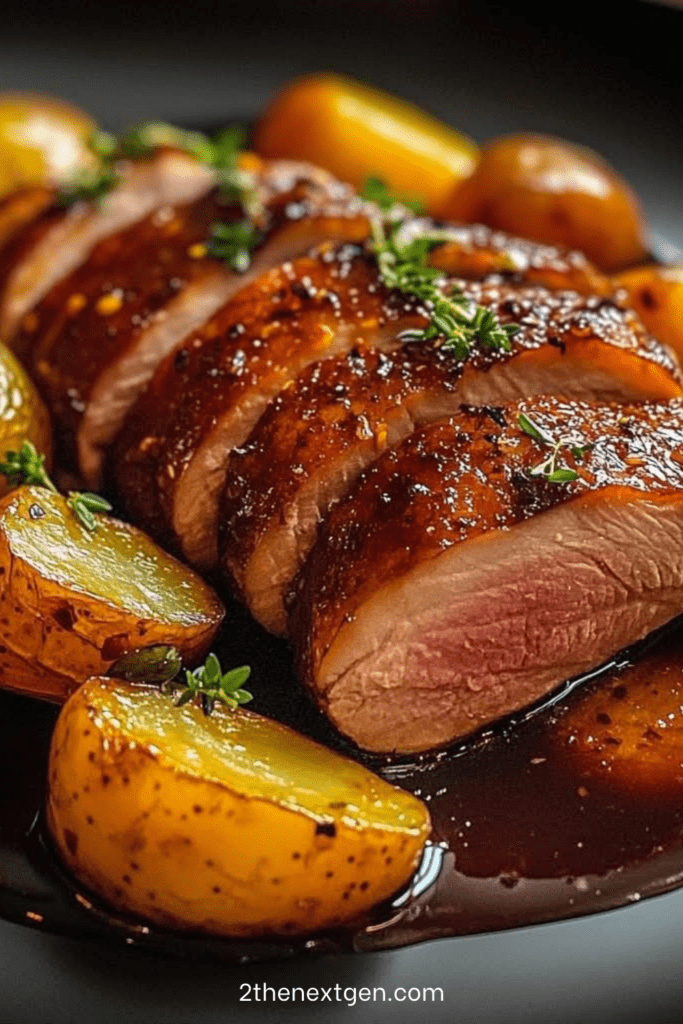
Arrange the slices of duck breast on a plate. Drizzle any remaining sauce from the pan over the top for added flavor. Serve alongside the roasted potatoes, which provide the perfect balance to the rich, honey-glazed duck. For a finishing touch, add a fresh thyme sprig or a sprinkle of cracked black pepper.
Nutritional Information (Estimated per Serving)
Here is an approximate nutritional breakdown for one serving:
- Calories: 540–620 kcal
- Protein: 32 g
- Fat: 38 g
- Carbohydrates: 32 g
- Fiber: 4 g
- Sugars: Moderate due to the honey glaze
- Sodium: Moderate from soy sauce
Duck breast is rich in protein and healthy monounsaturated fats, similar to those found in olive oil. Potatoes add comforting carbohydrates, while thyme provides antioxidants. Despite the richness, this dish can be part of a balanced meal when paired with vegetables or a fresh salad.
Frequently Asked Questions
How can I ensure the duck stays tender?
To keep the duck breast tender, avoid overcooking it. Medium doneness is ideal. Always let the meat rest before slicing, as this helps the juices redistribute and prevents dryness.
Can I marinate the duck in advance?
Yes. Marinating the duck for at least one hour enhances its flavor. If you want even deeper marination, you can prepare it up to 12 hours ahead and refrigerate it.
Can I use another type of meat?
Chicken thighs, chicken breast or turkey breast can be glazed with the same marinade. However, duck offers the richest flavor and best texture for this recipe.
Can I roast the potatoes in the oven instead?
Absolutely. Toss the halved potatoes with olive oil, thyme, salt and pepper, then roast at 200°C (392°F) for 25 to 30 minutes until crispy and golden.
What can I do with the rendered duck fat?
Duck fat is incredibly flavorful and ideal for roasting potatoes, vegetables or using as a base for sauces. Many chefs consider it one of the best cooking fats for achieving crisp, golden textures.
How do I know when the duck is cooked?
Medium doneness is achieved at an internal temperature of around 57°C to 60°C (135°F to 140°F). You may use a meat thermometer for accuracy.
Conclusion
Honey-Glazed Duck Breast with Roasted Potatoes is an impressive yet approachable dish that showcases the best qualities of duck: crisp skin, tender flesh and a rich, distinctive flavor. The honey glaze brings sweetness and shine, while the balsamic vinegar and soy sauce add depth and balance. Roasted baby potatoes complete the dish with comfort and rustic charm.
This recipe requires simple steps, but the results feel elegant and gourmet. Whether you are preparing a romantic dinner, hosting guests or simply exploring new flavors, this dish delivers a memorable culinary experience. With the right technique and attention to detail, you can create a beautifully plated and perfectly caramelized duck breast worth serving on any occasion.
Check also:
Lemon Chicken Ricotta Meatballs
Chicken and meat easy Recipes
Suggestions:
- Sheet Pan Fajita-Style Beef with Roasted Peppers
- Curry Lentil Meatballs with Creamy Lemon Yogurt Sauce
- Fluffy Cheese Soufflé Omelette Recipe
- Creamy Broccoli Pesto Spaghetti with Parmesan and Almonds
- Easy Vegetable Rolled Omelet for Healthy Lunchboxes