


Share
Introduction
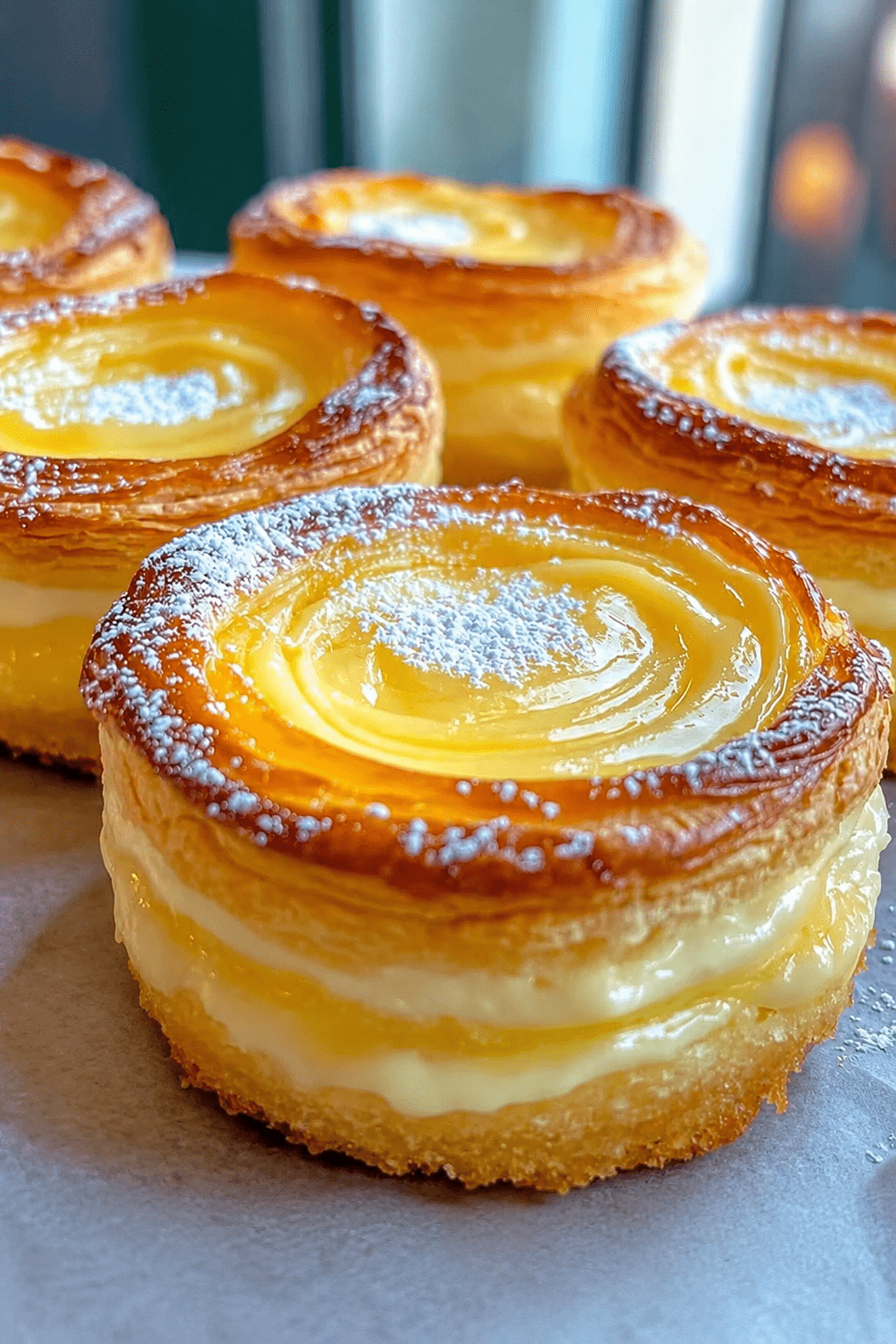
Lemon Custard Puff Pastry Tarts are light, crisp, creamy, and beautifully refreshing. They combine flaky golden puff pastry with a smooth lemon custard filling, creating a dessert that feels elegant but remains very easy to prepare at home. With their buttery pastry edges, tangy citrus cream, and delicate powdered sugar finish, these small tarts are perfect for tea time, brunch, family desserts, or special occasions.
This recipe is especially enjoyable because it offers a lovely contrast of textures. The puff pastry becomes crisp and slightly caramelized around the edges, while the lemon custard stays soft, silky, and fragrant. Moreover, the lemon juice and zest add brightness, making the tarts feel fresh rather than heavy.
Another reason to love these Lemon Custard Puff Pastry Tarts is their simplicity. Instead of making tart dough from scratch, you can use one sheet of puff pastry. This saves time while still giving a beautiful bakery-style result. Then, a homemade lemon custard is prepared on the stovetop with milk, egg yolks, sugar, cornstarch, lemon, vanilla, and butter. Once the pastry shells are filled, everything bakes together until golden and set.
These tarts can be served at room temperature or slightly chilled, which makes them very practical. You can prepare them for a dessert table, afternoon coffee, a spring celebration, or a quick weekend treat. Additionally, you can finish them with powdered sugar, extra lemon zest, or a small spoon of lemon curd for shine.
If you enjoy lemon desserts that are creamy, crisp, and easy to serve individually, this recipe is a wonderful choice. It is bright, delicate, and full of homemade charm.
History and Information About Lemon Custard Puff Pastry Tarts
Custard tarts have a long history in many baking traditions. Across Europe and beyond, bakers have used simple custards made from milk, eggs, sugar, and flavorings to fill pastry shells. These desserts became popular because they are rich, smooth, and easy to adapt with different flavors such as vanilla, chocolate, almond, or citrus.
Lemon custard is one of the most refreshing versions. The acidity of lemon balances the sweetness and richness of the custard, giving the filling a bright and clean taste. Lemon zest adds natural citrus oils, which make the flavor more fragrant and intense. As a result, even a small tart feels fresh and satisfying.
Puff pastry gives these tarts a lighter and flakier texture than a traditional shortcrust pastry. It is made from layers of dough and butter that rise in the oven, creating crisp, airy layers. When pressed into small molds and filled with custard, puff pastry creates a beautiful shell that looks elegant with very little effort.
This recipe is inspired by classic custard tarts, Portuguese-style pastry tarts, and French citrus pastries, while remaining simple enough for everyday home baking. The method is approachable because the custard is thickened before baking, which helps the filling stay creamy and stable.
Although these tarts look delicate, they are practical. They can be made in muffin pans or small tart molds, and they require only basic ingredients. Because they are served in individual portions, they are perfect for sharing and easy to present on a dessert platter.
Ingredients
For the Tart Bases
- 1 sheet puff pastry
- 1 egg, beaten
- & 1 tablespoon sugar
- Butter, for greasing the molds
For the Lemon Custard
- 400 ml milk
- 3 egg yolks
- 90 g sugar
- 35 g cornstarch
- 60 ml lemon juice
- 1 tablespoon lemon zest
- 1 teaspoon vanilla extract
- 30 g butter
For Finishing
- Powdered sugar
- Extra lemon zest, optional
- Lemon curd, optional for extra shine
Preparation Step by Step
Prepare the Oven and Molds
Start by preheating the oven to 200°C / 400°F. A hot oven is important because puff pastry needs strong heat to rise properly and become crisp.
Grease a muffin pan or small tart molds with butter. Make sure the bottom and sides are lightly coated so the pastry does not stick after baking. This step is especially helpful because the custard filling can sometimes bubble slightly around the edges.
If you are using individual tart molds, place them on a baking tray before filling. This makes them easier to move in and out of the oven.
Prepare the Puff Pastry
Roll out the puff pastry sheet on a lightly floured surface if needed. If the pastry is already rolled, simply unfold it gently.
Cut the pastry into circles slightly larger than your molds. The circles should be wide enough to cover the bottom and sides of each mold. If the circles are too small, the custard may overflow during baking.
Press each pastry circle gently into the prepared molds. Try not to stretch the pastry too much, because stretched pastry can shrink in the oven. Instead, press it lightly into place and let it sit naturally against the sides.
Prick the bottom lightly with a fork. This helps reduce puffing in the center and gives the custard a stable base.
Brush the edges with beaten egg, then sprinkle them lightly with sugar. The egg wash helps the pastry turn golden, while the sugar adds a subtle caramelized finish.
Make the Lemon Custard
Pour the milk into a saucepan and heat it gently until warm. Do not let it boil.
In a separate bowl, whisk the egg yolks with the sugar and cornstarch until smooth. The mixture should look creamy and slightly pale. Cornstarch helps thicken the custard and keeps it stable during baking.
Slowly pour the warm milk into the egg mixture while whisking constantly. This step is important because it tempers the egg yolks and prevents them from scrambling. Once the mixture is smooth, return it to the saucepan.
Cook over medium heat, stirring constantly. After a few minutes, the custard will begin to thicken. Continue stirring until it becomes smooth, creamy, and thick enough to coat the spoon.
Remove the saucepan from the heat. Add the lemon juice, lemon zest, vanilla extract, and butter. Mix until the butter melts completely and the custard becomes glossy and smooth.
The lemon juice gives the custard its bright flavor, while the zest adds a stronger citrus aroma. The butter makes the filling richer and silkier.
Fill the Tarts
Spoon the lemon custard into the prepared puff pastry shells. Fill each tart almost to the top, but do not overfill. The custard may puff slightly while baking, and the pastry also needs space to rise around the edges.
Use the back of a spoon to smooth the surface of each tart if needed. Try to divide the custard evenly so all the tarts bake at the same speed.
At this stage, the pastry should still be cold or at least cool. If the puff pastry has become too soft while you prepare the custard, place the filled tarts in the refrigerator for a few minutes before baking. Cold puff pastry usually rises better and creates flakier layers.
Bake the Tarts
Place the tarts in the preheated oven and bake for 20 to 25 minutes. The pastry should become golden, crisp, and slightly caramelized around the edges. The custard should be lightly set, with a smooth surface.
Keep an eye on the tarts during the last few minutes of baking. Puff pastry can brown quickly, especially around the edges. If the pastry is golden but the custard still looks too soft, lower the oven temperature slightly and bake for a few more minutes.
The finished tarts should look bright, golden, and lightly puffed. The custard will continue to set a little as it cools.
Cool the Tarts
Let the tarts cool in the pan for about 10 minutes. This short cooling time helps the pastry firm up and makes the tarts easier to remove without breaking.
After 10 minutes, carefully lift them from the molds and place them on a wire rack. Let them cool completely before serving. As they cool, the custard becomes firmer and the lemon flavor settles beautifully.
If you prefer a chilled dessert, refrigerate the cooled tarts for a short time before serving. However, if you want the pastry to stay extra crisp, room temperature is often the best option.
Finish with Powdered Sugar and Lemon Zest
Before serving, dust the tarts lightly with powdered sugar. This gives them a delicate bakery-style look.
For extra freshness, add a little lemon zest on top. You can also spoon a small amount of lemon curd over each tart if you want extra shine and a stronger lemon flavor.
Keep the finishing touches simple so the golden pastry and smooth custard remain the focus. A small amount of zest or curd is enough to make the tarts look beautiful and taste even brighter.
Serve the Lemon Custard Tarts
Serve the Lemon Custard Puff Pastry Tarts at room temperature or slightly chilled. They are delicious with coffee, tea, iced tea, or as a fresh dessert after lunch or dinner.
Because they are individual portions, they are easy to serve for guests. You can place them on a platter with extra lemon slices, berries, or a light dusting of powdered sugar for a more elegant presentation.
They are best enjoyed the same day, when the puff pastry is still crisp and flaky.
Helpful Tips for the Best Lemon Custard Puff Pastry Tarts
Use cold puff pastry for the best rise. If it becomes too soft, chill it briefly before baking.
Do not stretch the pastry when pressing it into the molds, because it may shrink in the oven.
Prick the bottom lightly to prevent the center from puffing too much.
Do not overcook the custard on the stovetop. It should be thick and creamy, but it will continue setting in the oven.
Use fresh lemon juice and fresh lemon zest for the brightest flavor.
Do not overfill the tart shells. Leave a little space so the custard does not spill as it bakes.
For a richer version, replace half of the milk with cream.
Serve the tarts the same day for the crispiest pastry.
Nutritional Information
The nutritional values below are approximate and may vary depending on the brand of puff pastry, the size of the tarts, and the amount of topping used. This recipe makes 6 to 8 tarts.
For one tart, based on 8 servings, Lemon Custard Puff Pastry Tarts contain approximately:
- Calories: 260 to 330 kcal
- Carbohydrates: 30 g
- Protein: 5 g
- Fat: 15 g
- Saturated Fat: 7 g
- Sugar: 13 g
- Fiber: 1 g
- Sodium: 150 mg
These tarts are a rich but balanced dessert because they combine buttery pastry with a creamy lemon filling. For a lighter version, you can make smaller tarts, use less sugar in the custard, or skip the extra lemon curd topping. For a richer version, replace part of the milk with cream and add a little extra butter to the custard.
FAQ
Can I Make Lemon Custard Puff Pastry Tarts Ahead of Time?
Yes, you can make them ahead, but they are best served the same day because puff pastry is crispiest when fresh. You can prepare the lemon custard in advance and keep it covered in the refrigerator. Then, assemble and bake the tarts when you are ready to serve.
Can I Use Store-Bought Lemon Curd Instead of Custard?
Yes, you can use lemon curd for a quicker version. However, lemon curd is usually more intense and tangier than custard. If you want a creamier texture, mix lemon curd with a little mascarpone, cream cheese, or whipped cream before filling the pastry shells.
Why Did My Puff Pastry Become Soggy?
Puff pastry can become soggy if the custard is too thin, the pastry is underbaked, or the tarts sit too long after baking. To avoid this, cook the custard until thick, bake the pastry until golden, and serve the tarts as fresh as possible.
Can I Make These Tarts Without Tart Molds?
Yes, you can use a muffin pan instead of tart molds. Muffin pans work very well and help create small deep tart shells. Just grease the pan properly and cut the pastry circles large enough to cover the sides.
How Do I Know When the Custard Is Cooked?
The custard is ready on the stovetop when it becomes thick, smooth, and creamy. During baking, it should look lightly set. It may still have a slight softness in the center, but it will firm up more as it cools.
Can I Add Other Flavors to the Custard?
Yes, you can add almond extract, orange zest, lime zest, or a little coconut extract for a different flavor. However, use small amounts so the lemon remains the main flavor.
Should These Tarts Be Served Warm or Cold?
They can be served at room temperature or slightly chilled. Warm tarts are softer and more delicate, while chilled tarts have a firmer custard. For the best balance, let them cool completely before serving.
How Long Do Lemon Custard Tarts Last?
They can be stored in the refrigerator for up to 2 days. However, the pastry will soften over time. For the best texture, enjoy them on the day they are baked.
Conclusion
Lemon Custard Puff Pastry Tarts are crisp, creamy, and wonderfully fresh. They combine buttery puff pastry with smooth lemon custard, creating a dessert that looks elegant while staying easy to make. With a light dusting of powdered sugar, fresh lemon zest, and optional lemon curd, each tart feels bright and delicious.
Moreover, this recipe is practical because it uses ready-made puff pastry and simple custard ingredients. The result is a dessert that can be served for tea time, brunch, family gatherings, or special occasions without requiring complicated baking techniques.
Serve these tarts at room temperature or slightly chilled, and enjoy the contrast between flaky pastry and silky lemon filling. They are simple, beautiful, and full of citrus flavor, making them a perfect dessert for anyone who loves fresh lemon treats.

Check also:
Lemon Chicken Ricotta Meatballs
Chicken and meat easy Recipes
Suggestions:
- Sheet Pan Fajita-Style Beef with Roasted Peppers
- Curry Lentil Meatballs with Creamy Lemon Yogurt Sauce
- Fluffy Cheese Soufflé Omelette Recipe
- Creamy Broccoli Pesto Spaghetti with Parmesan and Almonds
- Easy Vegetable Rolled Omelet for Healthy Lunchboxes