


Share
Introduction
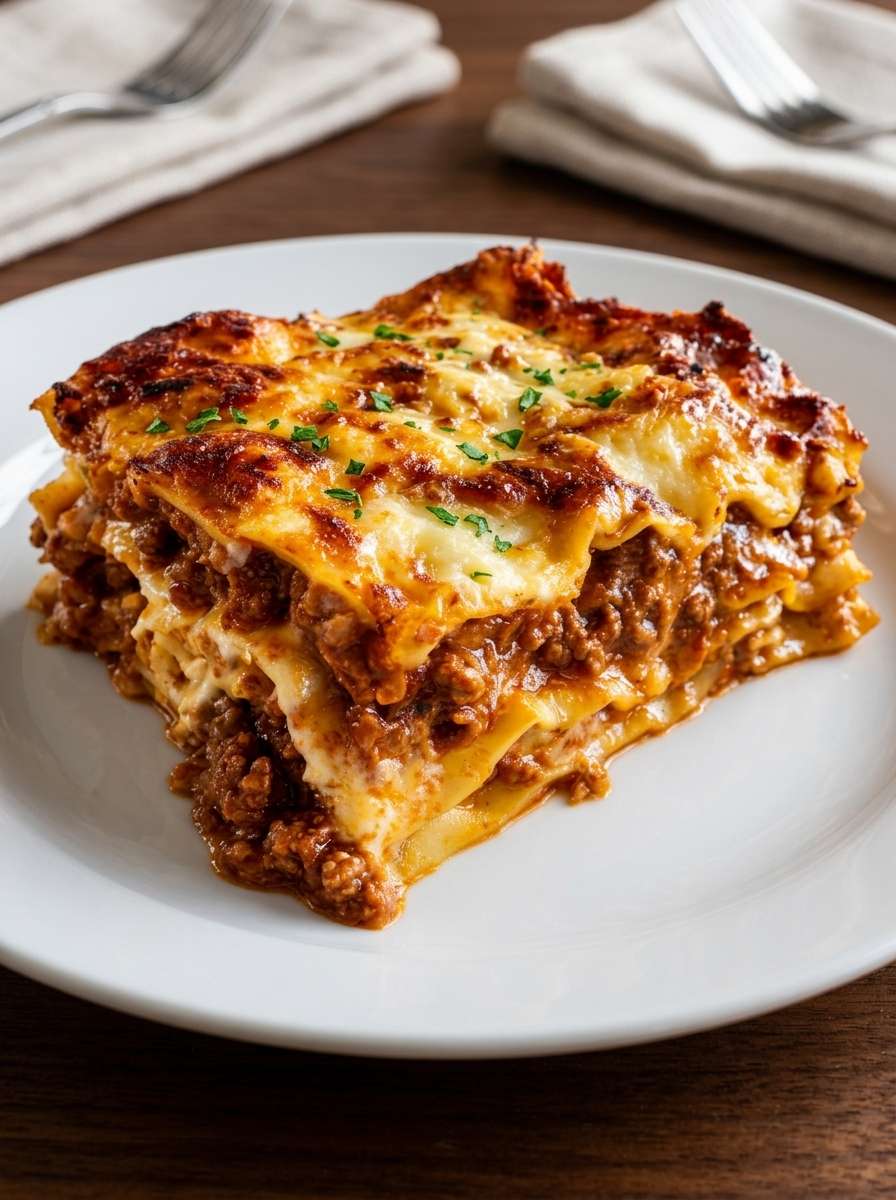
Homemade lasagna is one of the most comforting family meals you can prepare. It is rich, cheesy, saucy, and baked until the top becomes golden and bubbling. With layers of savory meat sauce, creamy ricotta, tender pasta, melted mozzarella, and Parmesan cheese, every slice feels hearty, warm, and deeply satisfying.
This world’s best lasagna recipe is perfect for family dinners, weekend meals, holidays, or any occasion when you want to serve something memorable. Although lasagna takes a little time to prepare, the result is always worth it. The slow-simmered meat sauce develops deep flavor, the cheese mixture adds creaminess, and the baked layers come together beautifully in the oven.
Moreover, this recipe is ideal for make-ahead cooking. Lasagna tastes even better after resting because the layers become more settled and the flavors have time to blend. Therefore, it is a great dish to prepare for gatherings, meal prep, or busy days when you want a comforting dinner ready to bake.
Another reason this lasagna is so loved is its balance. The Italian sausage adds richness, the ground beef gives heartiness, the tomatoes create a saucy base, and the herbs bring classic Italian-style flavor. Then, ricotta, mozzarella, and Parmesan create the cheesy layers that make lasagna irresistible.
History and Information About Lasagna
Lasagna is one of the most famous baked pasta dishes in the world. It is traditionally made by layering wide pasta sheets with sauce, cheese, and sometimes meat or vegetables. Over time, many versions have developed, but the basic idea remains the same: layers of pasta and flavorful filling baked together until tender and golden.
Italian-style lasagna often varies by region and household. Some versions use a meat ragù and béchamel sauce, while others use ricotta, mozzarella, and tomato-based meat sauce. This recipe follows the rich, hearty, family-style version that is especially popular for home cooking.
The meat sauce is one of the most important parts of this recipe. By simmering sausage, beef, tomatoes, garlic, herbs, and seasonings slowly, the sauce becomes thick, flavorful, and aromatic. The fennel seeds add a classic sausage-style flavor, while basil, parsley, and Italian seasoning bring warmth and depth.
The cheese layer is also essential. Ricotta mixed with egg and nutmeg creates a creamy filling that holds its shape while baking. Mozzarella melts beautifully between the layers, and Parmesan adds salty, nutty flavor on top.
Lasagna is loved because it feels generous and comforting. It is a dish made for sharing, and it often becomes the centerpiece of the table. Whether served with salad, garlic bread, roasted vegetables, or simply on its own, homemade lasagna always feels like a complete meal.
Ingredients
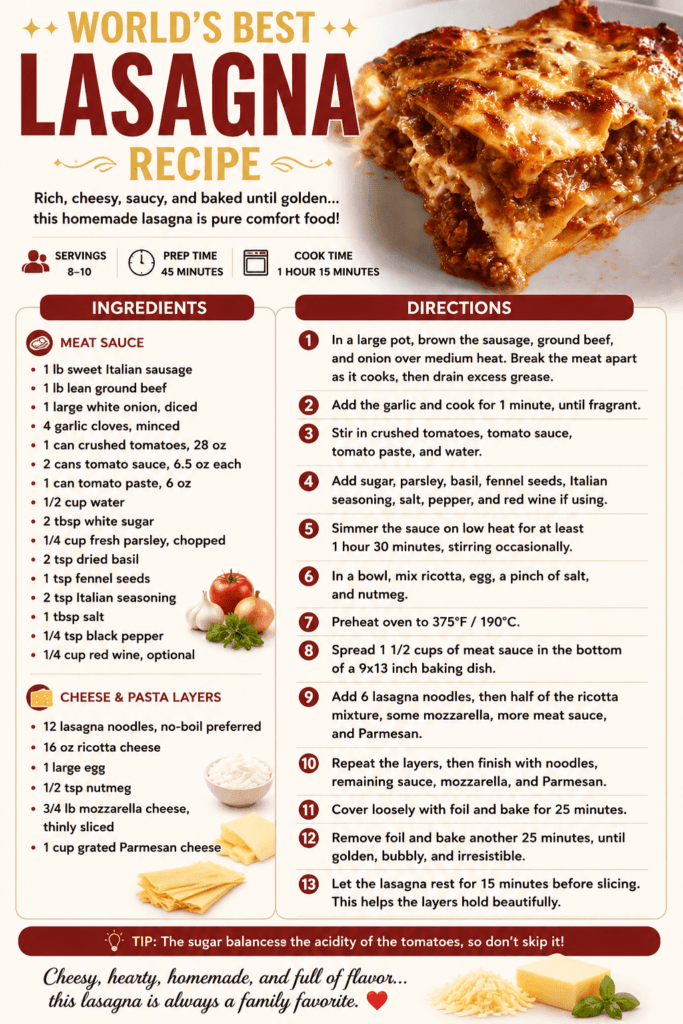
For 8 to 10 servings, you will need:
Meat Sauce
- 1 lb sweet Italian sausage
- 1 lb lean ground beef
- & 1 large white onion, diced
- 4 garlic cloves, minced
- 1 can crushed tomatoes, 28 oz
- 2 cans tomato sauce, 6.5 oz each
- 1 can tomato paste, 6 oz
- 1/2 cup water
- 2 tablespoons white sugar
- 1/4 cup fresh parsley, chopped
- 2 teaspoons dried basil
- 1 teaspoon fennel seeds
- 2 teaspoons Italian seasoning
- 1 tablespoon salt
- 1/4 teaspoon black pepper
- 1/4 cup red wine, optional
Cheese and Pasta Layers
- 12 lasagna noodles, no-boil preferred
- 16 oz ricotta cheese
- 1 large egg
- 1/2 teaspoon nutmeg
- 3/4 lb mozzarella cheese, thinly sliced
- 1 cup grated Parmesan cheese
Preparation Step by Step
Step 1: Brown the Meat and Onion
First, place a large pot over medium heat. Add the sweet Italian sausage, lean ground beef, and diced white onion.
Cook everything together, breaking the meat apart with a wooden spoon as it browns. Continue cooking until the meat is no longer pink and the onion has softened. This step builds the base flavor of the sauce.
Once the meat is browned, drain any excess grease from the pot. Removing extra grease keeps the sauce rich but not overly oily.
Step 2: Add the Garlic
Next, add the minced garlic to the browned meat mixture.
Cook for about 1 minute, stirring often, until the garlic becomes fragrant. Be careful not to burn it, because burnt garlic can taste bitter.
This short step adds a deep savory flavor to the sauce and makes the kitchen smell incredible.
Step 3: Add the Tomato Ingredients
Stir in the crushed tomatoes, tomato sauce, tomato paste, and water.
Mix well until the tomato paste is fully blended into the sauce. The crushed tomatoes add body, the tomato sauce adds smoothness, and the tomato paste gives a concentrated tomato flavor.
The water helps loosen the sauce while it begins to simmer. As the sauce cooks, it will thicken and become richer.
Step 4: Season the Sauce
Add the sugar, chopped parsley, dried basil, fennel seeds, Italian seasoning, salt, black pepper, and red wine if using.
Stir everything together until the seasonings are evenly distributed. The sugar helps balance the acidity of the tomatoes, while the herbs and spices give the sauce its classic lasagna flavor.
The red wine is optional, but it can add depth and richness. If you prefer not to use wine, simply leave it out.
Step 5: Simmer the Meat Sauce
Reduce the heat to low and let the sauce simmer for at least 1 hour and 30 minutes.
Stir occasionally so the sauce does not stick to the bottom of the pot. As it simmers, the flavors become deeper and the texture becomes thicker.
This long simmering time is one of the secrets to a great lasagna. A quick sauce can taste flat, but a slow-cooked sauce tastes rich, balanced, and homemade.
Step 6: Prepare the Ricotta Mixture
In a medium bowl, mix the ricotta cheese, egg, a pinch of salt, and nutmeg.
Stir until smooth and evenly combined. The egg helps the ricotta layer set during baking, while the nutmeg adds a subtle warmth that works beautifully with cheese.
Do not add too much nutmeg. A small amount is enough to enhance the creamy filling without overpowering the lasagna.
Step 7: Preheat the Oven
Preheat your oven to 375°F / 190°C.
While the oven heats, prepare a 9×13-inch baking dish. You do not need to grease it heavily because the sauce will help prevent sticking.
Make sure the meat sauce, ricotta mixture, mozzarella, Parmesan, and noodles are ready before assembling. Having everything prepared makes layering much easier.
Step 8: Add the First Layer of Sauce
Spread about 1 1/2 cups of meat sauce in the bottom of the baking dish.
This first layer prevents the noodles from sticking and helps them cook properly. It also creates a flavorful base for the lasagna.
Spread the sauce evenly across the bottom so every noodle has moisture underneath.
Step 9: Add the First Pasta Layer
Place 6 lasagna noodles over the sauce.
If using no-boil noodles, make sure they are covered well with sauce during layering so they soften properly in the oven. If needed, slightly overlap the noodles to fit the pan.
The pasta layer gives structure to the lasagna and helps separate the filling into beautiful slices.
Step 10: Add Ricotta, Mozzarella, Sauce, and Parmesan
Spread half of the ricotta mixture over the noodles.
Then add some mozzarella slices, followed by more meat sauce and a sprinkle of Parmesan cheese. Try to distribute each layer evenly so every slice has the right balance of pasta, sauce, and cheese.
The ricotta adds creaminess, the mozzarella melts into a stretchy layer, and the Parmesan adds a savory finish.
Step 11: Repeat the Layers
Repeat the layering process with more noodles, the remaining ricotta mixture, mozzarella, meat sauce, and Parmesan.
Layering carefully is important because it helps the lasagna hold together after baking. Avoid piling too much filling in one area. Instead, spread everything evenly from corner to corner.
At this point, the baking dish should be full but not overflowing.
Step 12: Finish the Top Layer
Finish the lasagna with a final layer of noodles, the remaining meat sauce, mozzarella, and Parmesan cheese.
The top should be well covered with sauce and cheese. This helps prevent dry noodles and creates a golden, bubbly finish after baking.
Parmesan on top adds flavor and helps the surface brown beautifully.
Step 13: Cover and Bake
Cover the baking dish loosely with foil.
Bake for 25 minutes. Covering the lasagna traps steam and helps the noodles cook through while keeping the top from browning too quickly.
To prevent the cheese from sticking to the foil, you can lightly tent the foil so it does not touch the surface.
Step 14: Remove the Foil and Continue Baking
After 25 minutes, remove the foil.
Bake for another 25 minutes, or until the lasagna is golden, bubbly, and heated through. The cheese should be melted, and the sauce should be bubbling around the edges.
If you want a more browned top, you can broil it briefly at the end. However, watch carefully because cheese can burn quickly.
Step 15: Let the Lasagna Rest
Remove the lasagna from the oven and let it rest for 15 minutes before slicing.
This step is very important. Resting allows the layers to settle and makes the lasagna easier to cut. If you slice it immediately, the layers may slide apart.
After resting, use a sharp knife and a wide spatula to serve clean, beautiful portions.
Nutritional Information
The following nutritional information is approximate and based on 10 servings. The values may vary depending on the sausage, beef, cheese, pasta, and sauce brands used.
Per serving, approximately:
- Calories: 480 to 620 kcal
- Protein: 28 to 36 g
- Fat: 25 to 36 g
- Carbohydrates: 32 to 45 g
- Fiber: 3 to 5 g
- Sugar: 8 to 12 g
- Sodium: 950 to 1,300 mg
This homemade lasagna is a hearty comfort food meal with protein from the beef, sausage, ricotta, mozzarella, and Parmesan. The pasta provides carbohydrates, while the tomato sauce adds flavor and moisture.
For a lighter version, use lean ground beef, turkey sausage, part-skim mozzarella, and lower-sodium tomato products. For a richer version, use full-fat cheeses and add extra mozzarella between the layers.
FAQ
Can I Make Lasagna Ahead of Time?
Yes, lasagna is an excellent make-ahead dish. You can assemble it, cover it tightly, and refrigerate it for up to 24 hours before baking. When ready to bake, let it sit at room temperature for about 20 to 30 minutes, then bake as directed. You may need to add a few extra minutes if it is still cold.
Can I Freeze Homemade Lasagna?
Yes, lasagna freezes very well. You can freeze it baked or unbaked. Wrap it tightly with plastic wrap and foil, then freeze for up to 2 to 3 months. Thaw overnight in the refrigerator before baking or reheating for the best texture.
Do I Have to Use No-Boil Lasagna Noodles?
No, you can use regular lasagna noodles if you prefer. Cook them according to the package instructions before layering. No-boil noodles are convenient because they cook in the sauce while baking, but they need enough sauce to soften properly.
Why Does Lasagna Need to Rest Before Slicing?
Lasagna needs to rest because the layers are very hot and loose right after baking. Resting helps the cheese, sauce, and pasta settle together. As a result, the slices hold their shape better and look cleaner on the plate.
Can I Make This Lasagna Without Sausage?
Yes, you can make it without sausage. Replace the sausage with more ground beef, ground turkey, or ground chicken. However, sausage adds a lot of flavor because it usually contains herbs and spices, so you may want to add extra Italian seasoning if you leave it out.
What Cheese Works Best for Lasagna?
Ricotta, mozzarella, and Parmesan are classic choices. Ricotta adds creaminess, mozzarella melts beautifully, and Parmesan adds salty, nutty flavor. You can also add provolone or Romano cheese for a stronger flavor.
Can I Add Vegetables to This Lasagna?
Yes, vegetables can be added. Mushrooms, spinach, zucchini, bell peppers, or eggplant work well. However, cook vegetables first to remove excess moisture. This prevents the lasagna from becoming watery.
How Do I Store Leftover Lasagna?
Store leftover lasagna in an airtight container in the refrigerator for up to 4 days. Reheat individual slices in the microwave or warm larger portions in the oven until hot. Add a little extra sauce before reheating if needed.
Conclusion
World’s best homemade lasagna is rich, cheesy, saucy, and full of comforting flavor. With Italian sausage, ground beef, slow-simmered tomato sauce, creamy ricotta, melted mozzarella, Parmesan, and tender pasta layers, it is the kind of dish that brings everyone to the table.
Moreover, this recipe is perfect for family dinners, weekends, holidays, and make-ahead meals. The sauce develops deep flavor as it simmers, the cheese layers become creamy and golden, and the final baked lasagna slices beautifully after resting.
In the end, homemade lasagna is more than just a pasta dish. It is warm, generous, and memorable. Served with salad, garlic bread, or roasted vegetables, this lasagna is a classic comfort food recipe you will want to make again and again.
Check also:
Lemon Chicken Ricotta Meatballs
Chicken and meat easy Recipes
Suggestions:
- Crispy Garlic Parmesan Fries Baked to Golden Perfection
- Creamy Tomato and Roasted Red Pepper Fusilli Recipe
- Juicy Grilled Beef Kofta Recipe with Creamy Yogurt Sauce
- Easy Ground Beef Fried Rice with Mixed Vegetables Recipe
- Moist Date and Walnut Loaf with Honey Glaze Recipe