



Share
Introduction
Homemade lemon meringue tartlets are the perfect dessert when you want something bright, elegant, and full of fresh flavor. Each tartlet combines a crisp buttery pastry shell, a smooth lemon cream filling, and a soft toasted meringue topping. As a result, every bite is sweet, tangy, creamy, and delicately crisp.
These small lemon meringue tartlets are especially charming because they feel refined without being too complicated. They are perfect for family desserts, afternoon tea, spring gatherings, summer parties, holidays, or any moment when you want to serve a homemade treat that looks beautiful on the table.
Moreover, the balance of textures makes this recipe truly special. The pastry gives a rich and crumbly base, the lemon filling brings freshness and brightness, and the meringue adds a light cloud-like finish. Therefore, this dessert never feels too heavy, even though it is wonderfully indulgent.
Another great advantage is that these tartlets can be prepared in stages. You can make the dough ahead of time, bake the tartlet shells, prepare the lemon cream, and finish with the meringue just before serving. Because of this, the recipe is practical for both beginner bakers and experienced home cooks.
If you love classic lemon desserts, these homemade lemon meringue tartlets are a recipe worth keeping. They are fresh, pretty, flavorful, and always impressive.
History and Information About Lemon Meringue Tartlets
Lemon desserts have been loved for centuries because they bring a refreshing contrast to rich pastry and cream-based fillings. The combination of lemon, sugar, eggs, and butter creates a smooth citrus cream that is both sharp and sweet. Over time, this filling became a favorite in pies, tarts, and small pastries.
Lemon meringue pie is one of the most famous citrus desserts, and tartlets are a more delicate version of the same idea. Instead of one large pie, the dessert is prepared in small individual portions. This makes the recipe easier to serve and gives each guest a beautiful little pastry with its own golden meringue topping.
The base of these tartlets is made with a simple shortcrust pastry. This type of pastry is known for its buttery texture and crumbly bite. It is often used for fruit tarts, cream tarts, and traditional French-style desserts. Since the dough is blind baked before being filled, it stays crisp and supports the creamy lemon filling perfectly.
The lemon cream is similar to lemon curd, although the texture can be slightly softer and silkier depending on how it is cooked. Eggs help the filling thicken, butter gives it shine and smoothness, and fresh lemon juice provides its signature flavor. Lemon zest is also important because it adds natural citrus aroma and makes the filling taste even more vibrant.
Although lemon meringue tartlets look elegant, they are made with simple ingredients. With a little patience and attention to each step, you can create bakery-style tartlets at home.
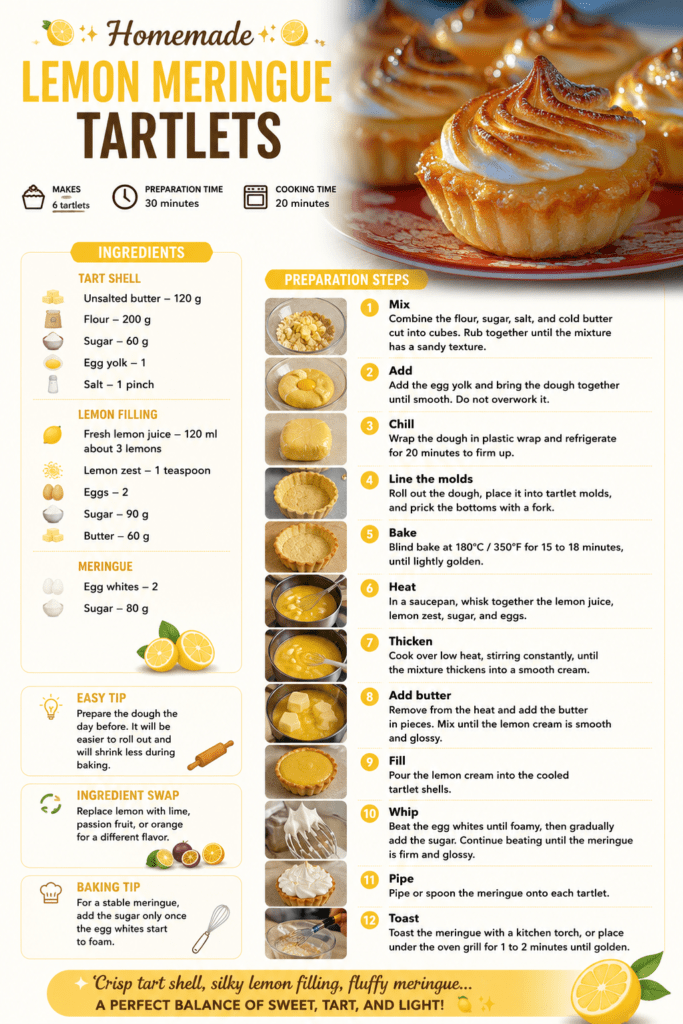
Ingredients
- 120 g unsalted butter, cold and cut into cubes
- 200 g flour
- 60 g sugar
- 1 egg yolk
- 1 pinch salt
- 120 ml fresh lemon juice, about 3 lemons
- 1 teaspoon lemon zest
- 2 eggs
- 90 g sugar
- 60 g butter, cut into pieces
- 2 egg whites
- 80 g sugar
Preparation Step by Step
Step 1: Prepare the Pastry Mixture
First, place the flour, sugar, and salt in a large mixing bowl. Then, add the cold butter cut into small cubes. Using your fingertips, rub the butter into the dry ingredients until the mixture looks sandy and crumbly.
This step is important because the cold butter creates a tender and crisp pastry texture. Therefore, avoid melting the butter with your hands. Work quickly and gently so the mixture stays cool. Once the texture looks like fine breadcrumbs, the dough is ready for the next step.
Step 2: Add the Egg Yolk
Next, add the egg yolk to the sandy mixture. Bring the dough together gently until it becomes smooth and cohesive. If the dough feels too dry, you can add a tiny splash of cold water, but do this carefully because too much liquid can make the pastry tough.
Do not overwork the dough. As soon as it comes together, stop mixing. Overworking activates the gluten in the flour, which can make the tartlet shells less delicate. The goal is a smooth, buttery dough that will bake into a crisp and tender crust.
Step 3: Chill the Dough
Wrap the dough in plastic wrap and refrigerate it for about 20 minutes. This resting time helps the butter firm up again and allows the dough to relax. As a result, it becomes easier to roll out and less likely to shrink during baking.
For even better results, you can prepare the dough the day before. Chilling it overnight improves the texture and makes it very easy to handle. Before rolling it out, let it sit at room temperature for a few minutes if it feels too firm.
Step 4: Line the Tartlet Molds
Lightly flour your work surface and roll out the chilled dough. Then, cut circles slightly larger than your tartlet molds. Gently place the dough into each mold and press it into the edges without stretching it.
After that, trim any excess dough and prick the bottoms with a fork. This helps prevent the pastry from puffing up during baking. If you want a very neat finish, you can chill the lined molds for a few extra minutes before baking.
Step 5: Blind Bake the Tartlet Shells
Preheat the oven to 180°C or 350°F. Place the tartlet molds in the oven and blind bake them for 15 to 18 minutes, or until they are lightly golden.
If you want to keep the shells very flat, you can cover each shell with parchment paper and add baking weights or dried beans. However, because these are small tartlets, pricking the bottoms well is often enough.
Once baked, remove the tartlet shells from the oven and let them cool completely before adding the lemon filling. This is important because warm pastry can soften the cream too quickly.
Step 6: Prepare the Lemon Mixture
In a saucepan, whisk together the fresh lemon juice, lemon zest, sugar, and eggs. Make sure the eggs are fully combined before placing the pan over the heat. This helps create a smooth texture and prevents lumps.
Fresh lemon juice gives the best flavor because it is bright, fragrant, and naturally tangy. In addition, the zest adds an intense lemon aroma that makes the filling taste fresh and homemade.
Step 7: Thicken the Lemon Cream
Place the saucepan over low heat and cook the mixture while stirring constantly. Continue stirring until it thickens into a smooth lemon cream. This may take a few minutes, so be patient.
Low heat is essential because eggs can scramble if the mixture gets too hot too quickly. Therefore, keep stirring and do not let the cream boil. The filling is ready when it coats the back of a spoon and looks glossy.
Step 8: Add the Butter
Remove the saucepan from the heat and add the butter in small pieces. Stir until the butter melts completely into the lemon cream. The filling should become smooth, shiny, and silky.
Butter adds richness and softens the sharpness of the lemon. It also gives the cream a luxurious texture. Once the filling is ready, let it cool slightly before pouring it into the tartlet shells.
Step 9: Fill the Tartlet Shells
Spoon or pour the lemon cream into the cooled tartlet shells. Fill each shell almost to the top, but leave a little space for the meringue.
Smooth the surface gently with the back of a spoon. Then, let the filled tartlets sit while you prepare the meringue. At this stage, the tartlets already look bright and delicious, but the meringue will make them even more beautiful.
Step 10: Whip the Meringue
Place the egg whites in a clean, dry mixing bowl. Beat them until they become foamy. Then, gradually add the sugar while continuing to beat. Keep whipping until the meringue becomes firm, glossy, and holds stiff peaks.
For a stable meringue, add the sugar only after the egg whites start to foam. Also, make sure the bowl is free from grease or egg yolk, because even a small amount of fat can prevent the whites from whipping properly.
Step 11: Pipe or Spoon the Meringue
Transfer the meringue to a piping bag and pipe it over each tartlet. You can create small peaks, swirls, or a simple domed shape. If you do not have a piping bag, simply spoon the meringue on top and create soft peaks with the back of the spoon.
Make sure the meringue touches the edges of the lemon filling. This helps seal the tartlets and gives them a generous, bakery-style appearance.
Step 12: Toast the Meringue
Finally, toast the meringue with a kitchen torch until it becomes lightly golden. Move the torch gently over the surface so the meringue colors evenly.
If you do not have a kitchen torch, place the tartlets under the oven grill for 1 to 2 minutes. Watch them carefully because meringue can brown very quickly. Once the tops are golden, remove the tartlets immediately and let them cool slightly before serving.
Nutritional Information
The following nutritional values are approximate and may vary depending on the size of the tartlet molds and the exact ingredients used. This estimate is based on one tartlet, with the recipe making 6 tartlets.
Each homemade lemon meringue tartlet contains approximately 330 to 390 calories. It provides around 40 g of carbohydrates, 5 g of protein, and 18 g of fat. The pastry and butter contribute richness, while the lemon juice adds freshness and a small amount of vitamin C.
Because these tartlets contain butter, sugar, and eggs, they are best enjoyed as an occasional dessert. However, they are served in individual portions, which makes them easier to enjoy in moderation. To make the recipe slightly lighter, you can reduce the sugar in the lemon cream a little or use a thinner layer of meringue.
Overall, these tartlets are a balanced dessert in terms of flavor. The lemon brings brightness, the pastry adds richness, and the meringue gives sweetness and softness.
FAQ
Can I Make Lemon Meringue Tartlets Ahead of Time?
Yes, you can prepare part of the recipe ahead of time. The pastry dough can be made the day before and kept in the refrigerator. You can also bake the tartlet shells in advance and store them in an airtight container. However, for the best texture, add the lemon filling and meringue closer to serving time.
How Do I Stop the Tartlet Shells from Shrinking?
To reduce shrinking, do not overwork the dough and make sure it rests in the refrigerator before baking. Also, avoid stretching the dough when lining the molds. If possible, chill the lined tartlet molds for a few minutes before placing them in the oven.
Can I Use Store-Bought Pastry?
Yes, store-bought shortcrust pastry can be used if you want to save time. However, homemade pastry gives a richer flavor and a more delicate texture. If using ready-made pastry, still chill it before baking and prick the bottoms with a fork.
Can I Replace Lemon with Another Fruit?
Yes, you can replace lemon with lime, orange, or passion fruit for a different flavor. Lime gives a sharper tropical taste, orange creates a sweeter and softer filling, and passion fruit adds an exotic tang. However, the acidity and sweetness may vary, so adjust the sugar if needed.
Why Did My Lemon Cream Become Lumpy?
Lemon cream can become lumpy if the heat is too high or if it is not stirred constantly. To prevent this, cook it over low heat and whisk continuously. If small lumps appear, you can pass the cream through a fine sieve before adding it to the tartlet shells.
How Do I Know When the Lemon Filling Is Thick Enough?
The lemon filling is ready when it coats the back of a spoon and looks smooth and glossy. It should be thick enough to hold in the tartlet shells but still soft enough to spread easily. Remember that it will continue to set slightly as it cools.
Why Is My Meringue Not Firm?
Meringue may not become firm if the bowl contains grease, if some egg yolk gets into the whites, or if the sugar is added too early. For best results, use a clean dry bowl, start whipping the whites until foamy, and then add the sugar gradually.
Can I Toast the Meringue Without a Kitchen Torch?
Yes, you can toast the meringue under the oven grill. Place the tartlets close to the heat and watch them carefully. They usually need only 1 to 2 minutes to become golden. Since meringue browns quickly, do not leave the oven unattended.
How Should I Store Lemon Meringue Tartlets?
Store the tartlets in the refrigerator if you are not serving them right away. They are best eaten the same day because the meringue and pastry are at their freshest. If stored too long, the pastry may soften and the meringue may lose some volume.
Conclusion
Homemade lemon meringue tartlets are a beautiful dessert that combines classic flavors with an elegant individual presentation. The buttery pastry shells, silky lemon cream, and toasted meringue create a perfect balance of crispness, freshness, sweetness, and softness.
In addition, this recipe is practical because several parts can be prepared ahead of time. You can make the dough in advance, bake the shells, and then finish the tartlets with lemon cream and meringue when needed. As a result, they are ideal for special occasions, family meals, or any day when you want a fresh homemade dessert.
With their golden crust, bright citrus filling, and glossy meringue peaks, these lemon meringue tartlets are both delicious and visually impressive. Serve them chilled or slightly cool, and enjoy a timeless dessert that always feels refined, fresh, and full of flavor.
Check also:
Lemon Chicken Ricotta Meatballs
Chicken and meat easy Recipes
Suggestions:
- Crispy Garlic Parmesan Fries Baked to Golden Perfection
- Creamy Tomato and Roasted Red Pepper Fusilli Recipe
- Juicy Grilled Beef Kofta Recipe with Creamy Yogurt Sauce
- Easy Ground Beef Fried Rice with Mixed Vegetables Recipe
- Moist Date and Walnut Loaf with Honey Glaze Recipe