


Share
Introduction
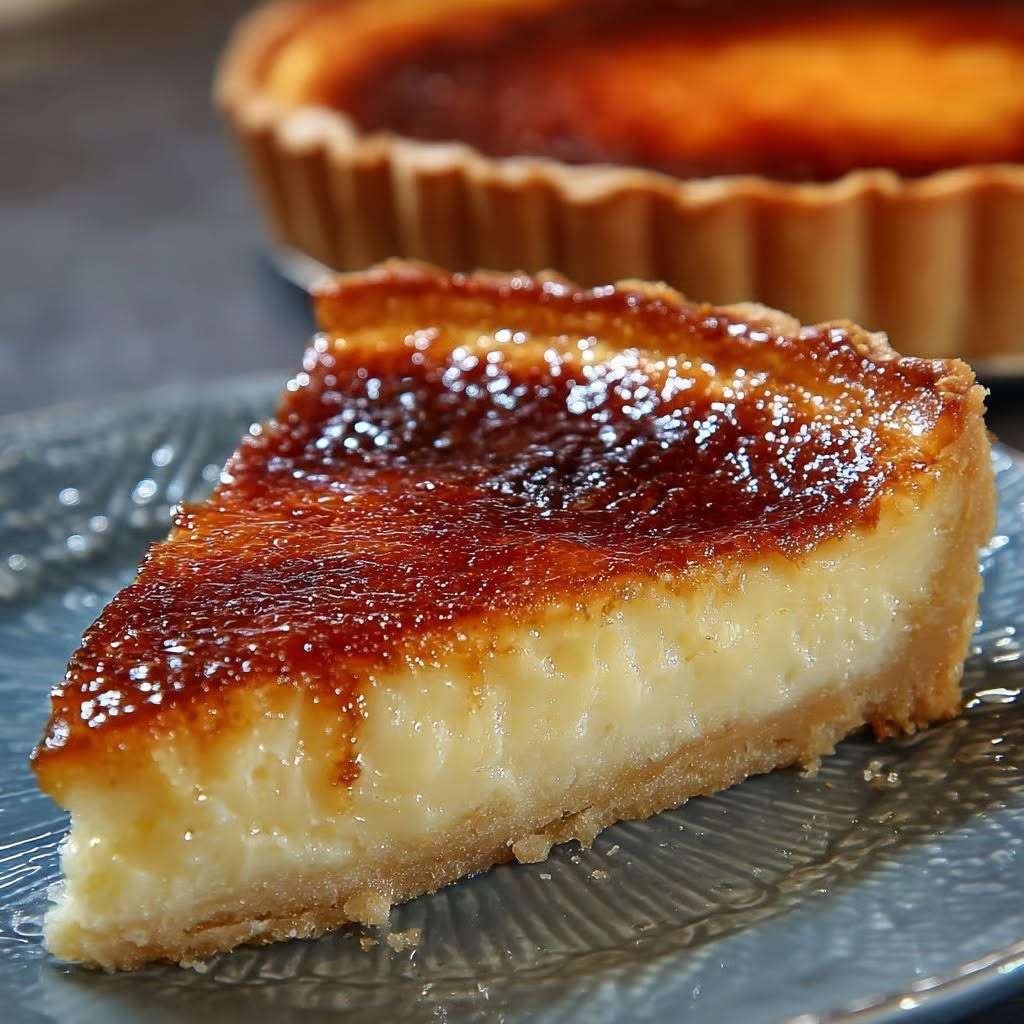
Grandma-style French custard tart, also known as classic French flan tart, is one of those timeless desserts that instantly feels comforting. With its crisp pastry crust, thick vanilla custard filling, and golden baked top, this traditional tart is simple, creamy, and wonderfully satisfying.
This recipe is inspired by the kind of dessert often served at family tables, in small bakeries, and during relaxed Sunday meals. It does not need complicated decoration or fancy ingredients. Instead, it relies on good milk, eggs, vanilla, sugar, and a well-baked pastry base. As a result, every slice is smooth, rich, fragrant, and beautifully nostalgic.
Moreover, this French custard tart is perfect when you want a dessert that can be prepared in advance. After baking, it needs time to cool and chill, which allows the custard to firm up properly. Therefore, it is ideal for family gatherings, weekend baking, birthdays, or any occasion where you want a homemade dessert that is easy to slice and serve.
The texture is what makes this tart so special. The custard is thick and creamy, yet firm enough to hold its shape. Meanwhile, the pastry adds a delicate crispness that balances the soft filling. Finally, the lightly caramelized top gives the tart a beautiful bakery-style finish.
If you love classic French desserts, this grandma-style custard tart is a recipe worth keeping. It is authentic, generous, and deliciously simple.
History and Information About French Custard Tart
French custard tart, often called flan pâtissier or flan parisien, is one of the most beloved bakery desserts in France. It is traditionally made with a pastry crust filled with a thick vanilla custard, then baked until the top becomes golden and slightly caramelized. Although it looks simple, it has a rich history rooted in everyday French baking.
Custard-based desserts have existed in European kitchens for centuries. Milk, eggs, and sugar were commonly used to create creamy fillings, puddings, and baked custards. Over time, French bakers refined these simple mixtures into elegant tarts and flans. The result was a dessert that could be both rustic and refined.
The classic French flan tart became especially popular because it was affordable, generous, and easy to share. It could be found in neighborhood bakeries, school snacks, family celebrations, and Sunday lunches. Unlike more delicate pastries, it was sturdy, satisfying, and practical. Therefore, it became a true comfort dessert for many generations.
What makes this recipe unique is its balance between simplicity and texture. The pastry crust provides structure, while the custard filling brings creaminess and flavor. Cornstarch is used to thicken the custard, giving it that signature firm yet silky texture. In addition, vanilla adds warmth and aroma, making the dessert feel rich without being heavy.
Another important detail is the golden top. A good custard tart should have a lightly browned surface, sometimes with darker caramelized spots. This gives the dessert its bakery-style appearance and adds a deeper flavor. For an even more caramelized finish, the tart can be placed briefly under the broiler at the end of baking.
Ingredients
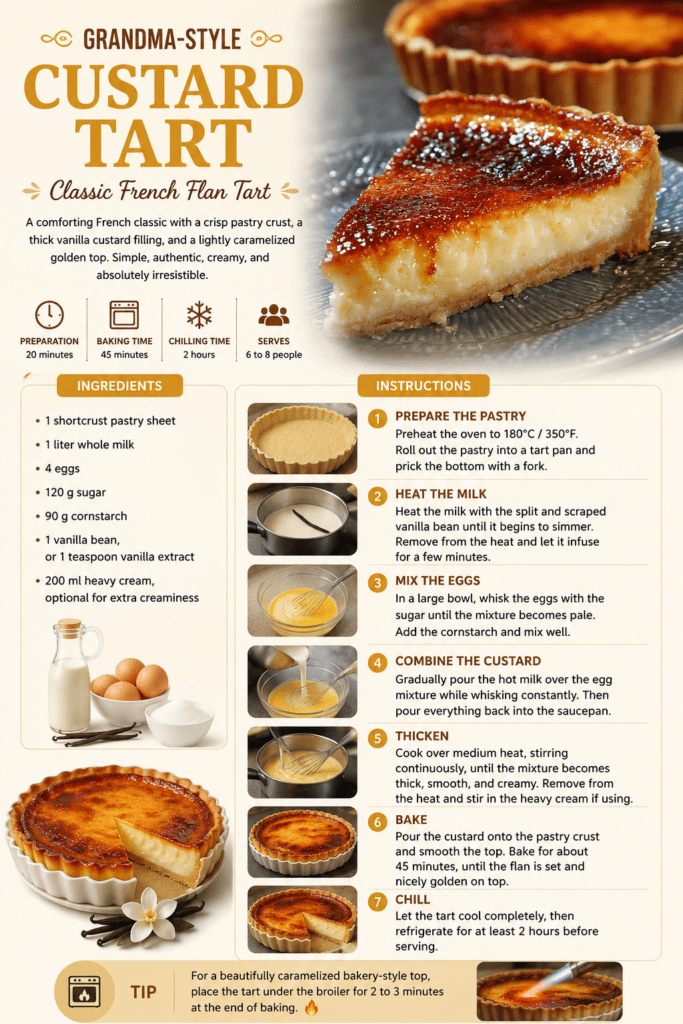
- 1 shortcrust pastry sheet
- 1 liter whole milk
- 4 eggs
- 120 g sugar
- 90 g cornstarch
- 1 vanilla bean, or 1 teaspoon vanilla extract
- 200 ml heavy cream, optional for extra creaminess
Preparation Step by Step
Step 1: Prepare the Pastry Crust
First, preheat the oven to 180°C or 350°F. Then, roll out the shortcrust pastry and place it carefully into a tart pan. Press the pastry gently into the bottom and sides of the pan without stretching it.
Next, trim any excess pastry around the edges. Prick the bottom with a fork to prevent it from puffing up during baking. This simple step helps the crust stay flat and even once the custard is added.
For the best result, place the lined tart pan in the refrigerator while you prepare the custard. Chilling the pastry helps reduce shrinking and gives the tart a better shape after baking.
Step 2: Heat the Milk with Vanilla
Pour the whole milk into a saucepan. Split the vanilla bean lengthwise, scrape out the seeds, and add both the seeds and pod to the milk. If you are using vanilla extract instead, add it after heating the milk.
Heat the milk over medium heat until it begins to simmer. It should be hot and fragrant, but it should not boil strongly. Once it starts to steam and small bubbles appear around the edges, remove the saucepan from the heat.
Let the vanilla infuse for a few minutes. This step allows the milk to absorb the warm vanilla aroma, which gives the custard its classic flavor.
Step 3: Whisk the Eggs and Sugar
In a large mixing bowl, whisk the eggs with the sugar until the mixture becomes pale and slightly foamy. This helps dissolve the sugar and creates a smoother custard base.
After that, add the cornstarch and whisk again until fully combined. Make sure there are no lumps. Cornstarch is essential because it thickens the custard and helps the tart hold its shape after baking.
At this stage, the mixture should look smooth, creamy, and even. Taking time to mix it well will help prevent lumps later when the hot milk is added.
Step 4: Combine the Hot Milk with the Egg Mixture
Gradually pour the hot vanilla milk over the egg mixture while whisking constantly. Add the milk slowly at first so the eggs warm up gently. This technique helps prevent the eggs from scrambling.
Continue whisking until all the milk has been incorporated. If you used a vanilla bean, remove the pod before continuing. You can also strain the mixture through a fine sieve for an extra-smooth custard.
Once combined, pour the mixture back into the saucepan. The custard is now ready to be thickened on the stove.
Step 5: Thicken the Custard
Place the saucepan over medium heat and cook the custard while stirring continuously. Use a whisk or spatula and make sure to scrape the bottom and sides of the pan, because the custard can thicken quickly.
After a few minutes, the mixture will become thicker, smoother, and creamier. Keep stirring until it reaches a thick pastry cream texture. It should hold its shape slightly when stirred.
Then, remove the pan from the heat. If you are using heavy cream, stir it in at this point. The cream will make the custard richer and silkier. Mix until everything is smooth and fully combined.
Step 6: Fill the Pastry Shell
Pour the warm custard into the prepared pastry crust. Spread it evenly with a spatula and smooth the top carefully. Try to level the surface so the tart bakes evenly.
Do not worry if the custard looks very thick. This is normal. As it bakes, it will set further and develop a beautiful golden top.
Place the tart pan on a baking tray before transferring it to the oven. This makes it easier to move and helps catch any small spills.
Step 7: Bake the Custard Tart
Bake the tart at 180°C or 350°F for about 45 minutes. The top should become golden, and the custard should be set. It may still have a slight wobble in the center, but it should not look liquid.
During baking, the top may develop darker caramelized spots. This is part of the traditional look of a French custard tart. In fact, these golden areas add flavor and make the tart look like it came from a bakery.
If you want a more caramelized top, place the tart under the broiler for 2 to 3 minutes at the end of baking. However, watch it carefully, because the surface can brown very quickly.
Step 8: Cool the Tart Completely
Once baked, remove the tart from the oven and let it cool at room temperature. This step is very important because the custard continues to firm up as it cools.
Do not slice the tart while it is still hot. The filling will be too soft and may not hold its shape. Instead, be patient and allow it to cool fully before chilling.
As the tart cools, the surface will settle slightly and the texture will become more stable.
Step 9: Chill Before Serving
After the tart has cooled completely, place it in the refrigerator for at least 2 hours. Chilling gives the custard its final firm and creamy texture.
For the best result, you can chill it for 4 hours or even overnight. The flavor becomes deeper, the vanilla aroma develops, and the tart becomes easier to slice cleanly.
Serve the tart cold or slightly chilled. It is delicious on its own, but you can also serve it with fresh berries, a dusting of powdered sugar, or a spoonful of fruit coulis.
Nutritional Information
The following nutritional values are approximate and may vary depending on the pastry sheet, milk, cream, and portion size used. This estimate is based on 8 servings.
Each slice of grandma-style French custard tart contains approximately 300 to 390 calories. It provides around 38 g of carbohydrates, 8 g of protein, and 14 g of fat. The milk and eggs bring protein and richness, while the pastry adds carbohydrates and a buttery texture.
If heavy cream is added, the tart becomes creamier and slightly higher in calories and fat. However, the cream also gives the filling a more luxurious texture. If you prefer a lighter version, you can omit the heavy cream and use only whole milk.
This dessert also provides calcium from the milk and cream, as well as small amounts of vitamins from the eggs. Because it contains sugar and pastry, it is best enjoyed as an occasional treat. Nevertheless, it is a satisfying homemade dessert that can be served in moderate slices.
FAQ
Can I Make French Custard Tart Ahead of Time?
Yes, French custard tart is excellent for making ahead. In fact, it needs time to chill before serving, so preparing it in advance is recommended. You can bake it the day before, let it cool, refrigerate it overnight, and serve it the next day.
Why Is My Custard Tart Not Firm Enough?
If the custard tart is not firm enough, it may not have cooked long enough on the stove or baked long enough in the oven. The custard should be thick before it is poured into the crust. Also, the tart needs at least 2 hours in the refrigerator to set properly.
Can I Use Puff Pastry Instead of Shortcrust Pastry?
Yes, puff pastry can be used, but shortcrust pastry is more traditional for this style of tart. Puff pastry gives a lighter, flakier texture, while shortcrust pastry creates a crisp and sturdy base that supports the thick custard better.
Can I Make This Custard Tart Without Heavy Cream?
Yes, the heavy cream is optional. You can make the tart with whole milk only, and it will still be delicious. The cream simply adds extra richness and smoothness. For a more traditional and lighter result, omit the cream.
How Do I Get a Golden Caramelized Top?
To get a golden caramelized top, bake the tart until the surface is nicely browned. For a deeper bakery-style finish, place it under the broiler for 2 to 3 minutes at the end of baking. However, keep a close eye on it so it does not burn.
Can I Use Vanilla Extract Instead of a Vanilla Bean?
Yes, vanilla extract works very well. A vanilla bean gives a more intense and natural aroma, but vanilla extract is practical and easy to use. Add the extract after heating the milk so the flavor stays fragrant.
How Should I Store Custard Tart?
Store the custard tart in the refrigerator, covered or placed in an airtight container. It is best eaten within 2 to 3 days. Because the filling contains milk and eggs, it should not be kept at room temperature for too long.
Can I Freeze French Custard Tart?
Freezing is not recommended because the custard texture may become watery or grainy after thawing. For the best flavor and texture, enjoy the tart fresh from the refrigerator within a few days.
Why Did My Custard Become Lumpy?
Custard can become lumpy if it is cooked over heat that is too high or if it is not stirred constantly. To avoid this, cook it over medium heat and whisk continuously. If lumps appear, strain the custard through a fine sieve before pouring it into the pastry shell.
Conclusion
Grandma-style French custard tart is a comforting, creamy, and timeless dessert that proves simple ingredients can create something truly special. With its crisp shortcrust pastry, thick vanilla custard filling, and golden caramelized top, it is both rustic and elegant.
Furthermore, this recipe is practical because it can be prepared ahead of time and served chilled. The resting time allows the custard to set beautifully, making each slice smooth, firm, and full of vanilla flavor.
Whether you serve it for a family lunch, a weekend dessert, or a special gathering, this classic French flan tart always brings warmth and nostalgia to the table. It is simple, authentic, and irresistibly creamy, just like a dessert made in grandma’s kitchen.
Check also:
Lemon Chicken Ricotta Meatballs
Chicken and meat easy Recipes
Suggestions:
- Crispy Garlic Parmesan Fries Baked to Golden Perfection
- Creamy Tomato and Roasted Red Pepper Fusilli Recipe
- Juicy Grilled Beef Kofta Recipe with Creamy Yogurt Sauce
- Easy Ground Beef Fried Rice with Mixed Vegetables Recipe
- Moist Date and Walnut Loaf with Honey Glaze Recipe