


Share
Introduction
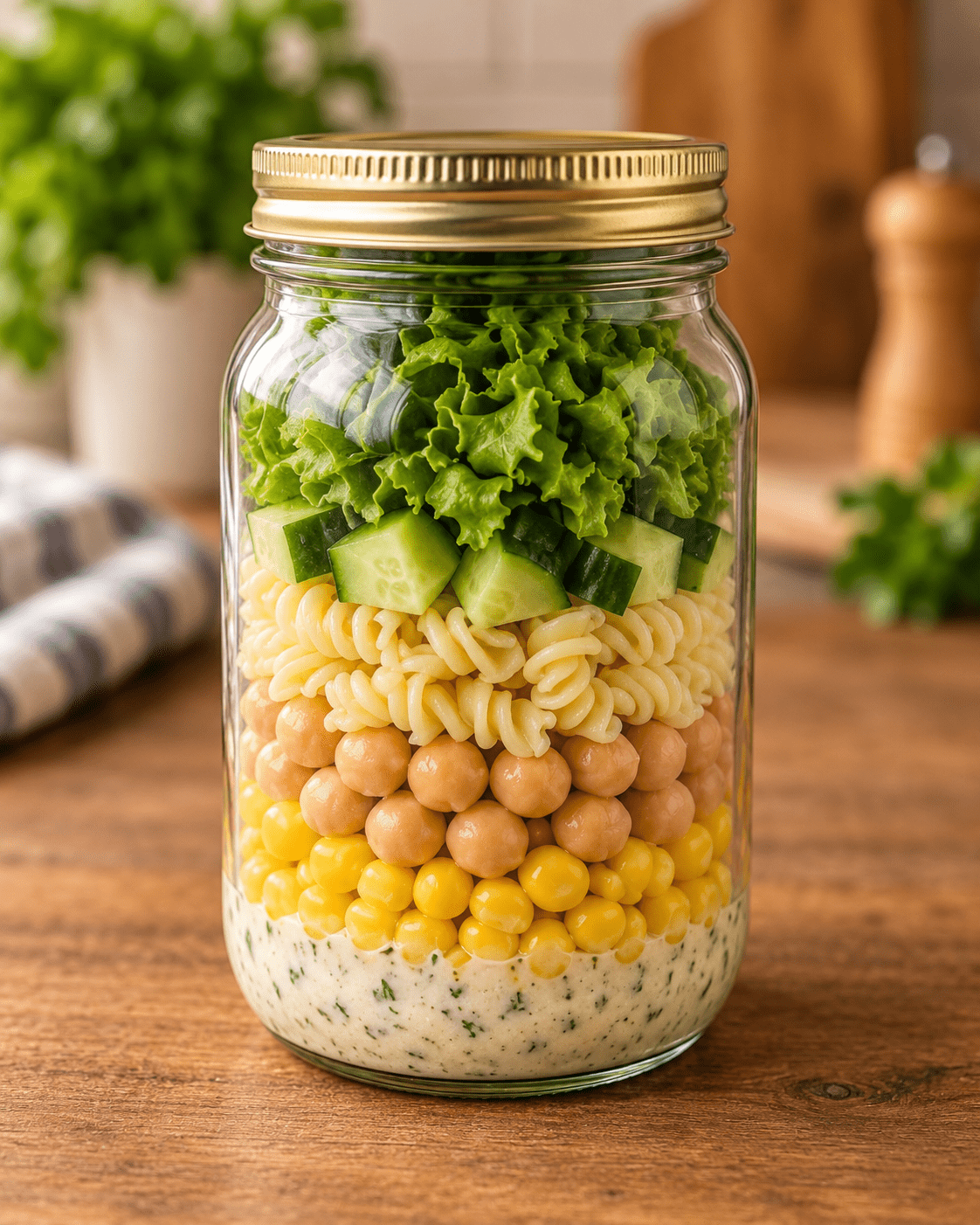
A busy school day becomes much easier when lunch is already prepared, colorful, and ready to grab from the refrigerator. This layered mason jar salad is a practical way to combine fresh vegetables, pasta, chickpeas, corn, leafy greens, and vinaigrette in one convenient container.
Unlike an ordinary salad that can become soft or soggy after sitting for several hours, a properly layered jar salad keeps the dressing away from the delicate lettuce until you are ready to eat. Therefore, each ingredient maintains a better texture throughout the day.
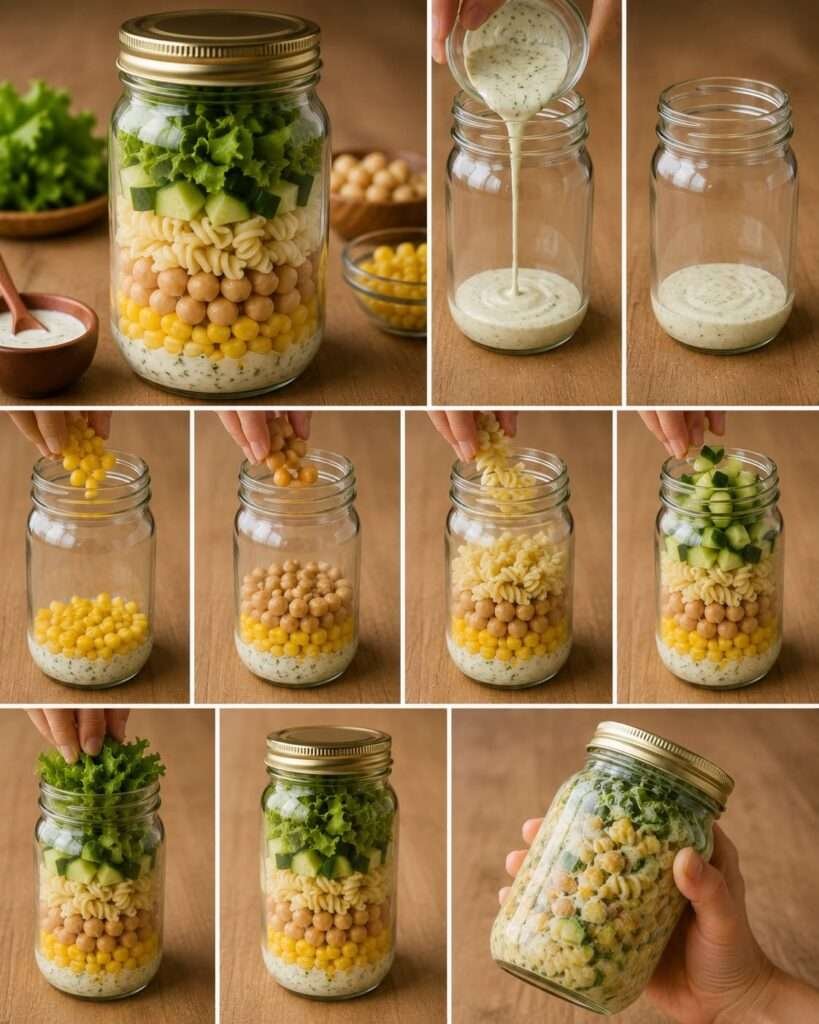
The secret is simply the order of the layers. Vinaigrette goes at the bottom, followed by ingredients that can handle contact with dressing, such as corn and chickpeas. Pasta and cucumber come next, while the fresh salad leaves stay at the very top.
When lunchtime arrives, you can shake the jar to distribute the dressing or empty everything into a bowl and toss it together.
Moreover, this recipe is easy to customize. You can change the vegetables, use different types of pasta, add cheese, include another source of protein, or experiment with different dressings.
Because it can be prepared ahead of time, this layered salad is especially useful for school lunches, office lunches, picnics, meal prep, and busy weekdays. It offers a simple balance of fresh vegetables, satisfying carbohydrates, and plant-based protein while remaining colorful and appealing.
What Is a Layered Mason Jar Salad?
A layered mason jar salad is a salad assembled vertically inside a jar or another tall container instead of being mixed together immediately.
Although the concept is simple, the layering method serves an important purpose. The dressing stays at the bottom, while moisture-sensitive ingredients remain near the top.
As a result, leafy greens can stay crisp for much longer than they would in a salad that had already been tossed with dressing.
Mason jar salads became particularly popular with meal-prep enthusiasts because they are portable, visually appealing, and easy to organize in advance. Each layer can be seen through the glass, which also makes it easy to check what is inside before leaving home.
Additionally, the recipe can be adapted to almost any style of salad. Mediterranean ingredients, grains, beans, roasted vegetables, cheese, chicken, tuna, or seeds can all be layered using the same basic principle.
For this version, pasta makes the salad more filling, while chickpeas provide additional texture and plant-based protein. Sweet corn adds color and gentle sweetness, and cucumber contributes freshness and crunch.
Finally, crisp lettuce completes the top layer and stays separated from the vinaigrette until mealtime.
Ingredients for Layered Mason Jar Salad
The ingredients below make approximately one generous lunch-size jar. However, you can easily multiply the quantities to prepare several portions at once.
- 2 to 3 tablespoons vinaigrette
- 1/3 cup sweet corn, drained
- 1/3 cup cooked chickpeas, drained and rinsed
- 1/2 cup cooked pasta, cooled completely
- 1/2 cup cucumber, diced or sliced
- 1 to 2 cups chopped lettuce or mixed salad greens
- Salt and black pepper, optional
- Fresh herbs such as parsley or basil, optional
- Crumbled feta or grated cheese, optional
- Pumpkin seeds or sunflower seeds, optional
Choose a vinaigrette you enjoy because it will influence the overall flavor of the salad. A simple combination of olive oil, lemon juice or vinegar, mustard, salt, and pepper works particularly well.
For the pasta, small shapes such as fusilli, farfalle, penne, or macaroni are especially convenient because they fit easily into the jar and mix well with the other ingredients.
How to Make a Layered Mason Jar Salad
Step 1: Cook and Cool the Pasta
Begin by cooking the pasta according to the package instructions.
For the best texture, cook it until just al dente rather than extremely soft. This is especially important because the pasta will sit in the jar for several hours and may absorb a small amount of moisture.
Once cooked, drain the pasta thoroughly.
Then, rinse it briefly with cool water if necessary and allow it to cool completely before assembling the salad.
Do not place hot pasta into the jar because the trapped heat can create condensation. Consequently, the salad leaves may lose some of their crisp texture.
Step 2: Prepare the Chickpeas and Corn
Drain the chickpeas and rinse them under cold water.
Afterward, allow them to drain thoroughly or pat them gently with a clean kitchen towel.
Next, drain the sweet corn as well.
Removing excess liquid from both ingredients helps prevent unnecessary moisture from collecting inside the jar.
Chickpeas are particularly useful in this recipe because they are firm enough to sit near the dressing without becoming unpleasantly soft.
Step 3: Prepare the Cucumber and Lettuce
Wash the cucumber thoroughly and cut it into small cubes, half-moons, or thin slices.
If the cucumber contains a particularly watery center, you can remove some of the seeds before chopping it.
Next, wash and dry the lettuce or salad greens thoroughly.
Drying the greens is very important. Excess water can cause lettuce to soften more quickly, especially when stored in a closed container.
A salad spinner works well, although clean kitchen towels can also be used.
Once dry, chop larger lettuce leaves into bite-size pieces.
Step 4: Add the Vinaigrette First
Pour approximately two to three tablespoons of vinaigrette into the bottom of a clean jar.
This should always be the first layer.
By keeping the dressing at the bottom, it remains separated from the lettuce. Therefore, the leaves stay fresh instead of sitting in vinaigrette for several hours.
If you prefer a lightly dressed salad, use closer to two tablespoons. For a more generous coating, add three tablespoons.
Step 5: Add the Corn
Spoon the drained corn over the vinaigrette.
Corn works well near the bottom because it is relatively sturdy and does not become soggy quickly.
Moreover, its mild sweetness pairs particularly well with tangy vinaigrette and chickpeas.
Try to spread the corn into a relatively even layer before adding the next ingredient.
Step 6: Layer in the Chickpeas
Add the drained chickpeas over the corn.
Since chickpeas have a firm texture, they create another useful barrier between the vinaigrette and the more delicate ingredients above.
Additionally, they make the salad more satisfying and provide plant-based protein and fiber.
If desired, you can season the chickpeas beforehand with black pepper, paprika, garlic powder, or dried herbs.
Step 7: Add the Pasta
Spoon the cooled pasta into the jar.
Make sure it is completely cool and reasonably dry before adding it.
The pasta creates a substantial middle layer and helps turn a simple salad into a more complete lunch.
At this stage, you can also add a small amount of feta, grated cheese, or chopped herbs if desired.
However, avoid adding too many wet ingredients because the goal is to keep the upper layers as fresh as possible.
Step 8: Add the Cucumber
Place the chopped cucumber over the pasta.
Cucumber adds freshness, color, and a satisfying crisp texture.
Although cucumber naturally contains a lot of water, keeping it above the pasta and away from the vinaigrette helps maintain a better texture.
If you are preparing the salad several days in advance, patting the chopped cucumber dry can be particularly helpful.
Step 9: Finish With the Lettuce
Finally, fill the remaining space with chopped lettuce or mixed salad greens.
The greens should always be placed at the top of the jar because they are the most delicate ingredient.
Do not press them down too firmly. Leaving a little space helps prevent bruising and makes it easier to shake the salad later.
Once the jar is filled, close the lid securely.
Step 10: Shake and Serve
Keep the jar refrigerated until lunchtime.
When you are ready to eat, shake the closed jar firmly so that the vinaigrette moves through the layers and coats the ingredients.
Alternatively, empty the entire jar into a bowl or onto a plate.
This method often distributes the dressing more evenly and allows the lettuce to fall naturally underneath the heavier ingredients.
Then, toss gently and serve immediately.
Tips for the Best Mason Jar Salad
The order of the ingredients is the most important part of a successful jar salad.
Always keep the dressing at the bottom and the lettuce at the top. Between those two layers, arrange the ingredients from the most durable to the most delicate.
Additionally, make sure all cooked ingredients are completely cool before assembling the jar. Warm ingredients can create condensation and shorten the freshness of the salad.
Drying vegetables and greens thoroughly also makes a considerable difference.
Furthermore, choose a jar that is large enough to hold the ingredients without compressing them excessively. A container of approximately 750 ml to 1 liter is usually suitable for a generous lunch.
Finally, keep the jar refrigerated until you are ready to eat it. If you are transporting it for several hours, use an insulated lunch bag with an ice pack to keep the ingredients properly chilled.
Easy Variations for Your Layered Salad
One of the best features of this recipe is how easy it is to adapt.
For a Mediterranean version, add cherry tomatoes, olives, feta cheese, parsley, and a lemon vinaigrette.
Alternatively, replace the pasta with cooked quinoa, couscous, bulgur, or brown rice.
For additional protein, you can add cooked chicken, tuna, hard-boiled egg, lentils, or cubes of cheese.
If you want more crunch, include shredded carrots, bell peppers, radishes, pumpkin seeds, or sunflower seeds.
You can also change the dressing completely. Honey mustard dressing, yogurt dressing, balsamic vinaigrette, lemon dressing, or a creamy herb dressing can all work well.
However, regardless of the ingredients you choose, keep the same basic layering principle: dressing first and leafy greens last.
Nutritional Information
The exact nutritional values will depend on the quantities, pasta type, dressing, and additional toppings used.
For one generous jar made with vinaigrette, chickpeas, corn, pasta, cucumber, and lettuce, you may expect approximately:
- Calories: 400 to 500 kcal
- Protein: 12 to 16 g
- Carbohydrates: 55 to 70 g
- Fat: 12 to 18 g
- Saturated fat: 2 to 4 g
- Fiber: 9 to 13 g
- Sugar: 6 to 10 g
- Sodium: approximately 400 to 700 mg
Chickpeas contribute fiber and plant-based protein, while pasta provides carbohydrates that can make the salad more filling.
Meanwhile, lettuce, cucumber, and corn add vegetables, texture, and color.
The vinaigrette usually contributes most of the fat and a significant amount of the calories. Therefore, using a lighter dressing or a smaller quantity can reduce the overall calorie content.
These values are estimates and will vary depending on the specific ingredients used.
Frequently Asked Questions
How Long Does a Mason Jar Salad Stay Fresh?
A properly layered mason jar salad can generally be stored in the refrigerator for approximately three to four days.
However, freshness depends on the ingredients used.
Very watery vegetables may shorten storage time, while sturdy vegetables, chickpeas, pasta, and well-dried greens tend to hold up better.
For the freshest result, prepare the salad within a few days of when you plan to eat it.
Why Does the Dressing Go at the Bottom?
The dressing goes at the bottom so that it does not sit directly against the lettuce.
If salad leaves remain coated in dressing for several hours, they can quickly become soft and wilted.
By placing sturdy ingredients between the dressing and the greens, the salad stays fresher until mealtime.
Can I Prepare These Salads for the Whole Week?
You can prepare several jars in advance, although salads containing cucumber and delicate greens are usually best eaten within three to four days.
For longer meal prep, you could prepare the pasta, chickpeas, corn, and dressing separately and assemble later in the week.
This can help maintain maximum freshness.
Can I Use Another Type of Bean?
Yes.
White beans, black beans, kidney beans, lentils, or edamame can all work depending on the flavor profile you want.
Make sure canned beans are rinsed and well drained before placing them in the jar.
What Pasta Is Best for Mason Jar Salad?
Small pasta shapes are usually the easiest to eat and layer.
Fusilli, penne, farfalle, macaroni, rotini, and small shells are all excellent choices.
Avoid overcooking the pasta because it should maintain enough firmness to hold its texture after refrigeration.
Can I Make This Salad Without Pasta?
Absolutely.
You can simply omit the pasta or replace it with quinoa, rice, bulgur, couscous, lentils, or another grain.
For a lower-carbohydrate version, add more vegetables, chickpeas, or another protein source instead.
Should I Shake the Jar Before Eating?
Yes, if the lid is securely closed and there is enough space inside.
Shaking allows the vinaigrette to move from the bottom and coat the remaining ingredients.
However, you can also pour the salad into a bowl and toss it manually.
In fact, using a bowl often makes it easier to distribute the dressing evenly.
Can I Add Tomatoes?
Yes.
Cherry tomatoes or grape tomatoes work particularly well.
For the best texture, keep them in one of the lower or middle layers rather than directly beside the lettuce.
If sliced tomatoes release a lot of juice, they may make the salad more watery, so whole or halved cherry tomatoes are often preferable.
Is This Salad Good for School Lunches?
Yes, provided it can be kept chilled until mealtime.
Its compact format makes it easy to transport, while the pasta and chickpeas help make it more filling than a plain green salad.
For younger children, using a lightweight reusable container instead of glass may be more practical and safer.
Can I Add Cheese?
Certainly.
Feta, mozzarella pearls, cheddar cubes, Parmesan, or another favorite cheese can all be added.
Place cheese in one of the middle layers so that it stays separate from the lettuce and mixes naturally with the pasta and vegetables when served.
Conclusion
This easy layered mason jar salad is a practical solution for busy school days, work lunches, and make-ahead meal preparation. By arranging vinaigrette, corn, chickpeas, pasta, cucumber, and lettuce in the correct order, you can keep the ingredients fresh and appealing until it is time to eat.
Moreover, the recipe provides a satisfying combination of textures. The chickpeas are tender, the corn adds sweetness, the pasta makes the salad more substantial, the cucumber brings crunch, and the lettuce stays crisp at the top.
The biggest advantage, however, is convenience. You can prepare the salad in advance, refrigerate it, and simply grab it when you are ready to leave.
Then, at lunchtime, shake the jar or transfer the contents into a bowl and enjoy a colorful meal with almost no additional preparation.
Because the recipe is so adaptable, you can also change the ingredients according to what you have available. Add cheese, another protein source, different vegetables, seeds, grains, or your favorite dressing.
Whether you are planning school lunches, preparing meals for work, or simply trying to make weekday eating more organized, this layered mason jar salad offers an easy, fresh, and versatile option that can become part of your regular meal-prep routine.
Check also:
Lemon Chicken Ricotta Meatballs
Chicken and meat easy Recipes
Suggestions:
- Baked Eggs with Mushrooms and Comté Cheese
- Warm Chicken Sweet Potato and Feta Bowl
- Pesto Mozzarella Sun Tart: Easy Puff Pastry Appetizer
- Roasted Pears with Honey and Blue Cheese Appetizer
- Savory Corn and Cheddar Pancakes: Easy Brunch Recipe