


Share
Introduction
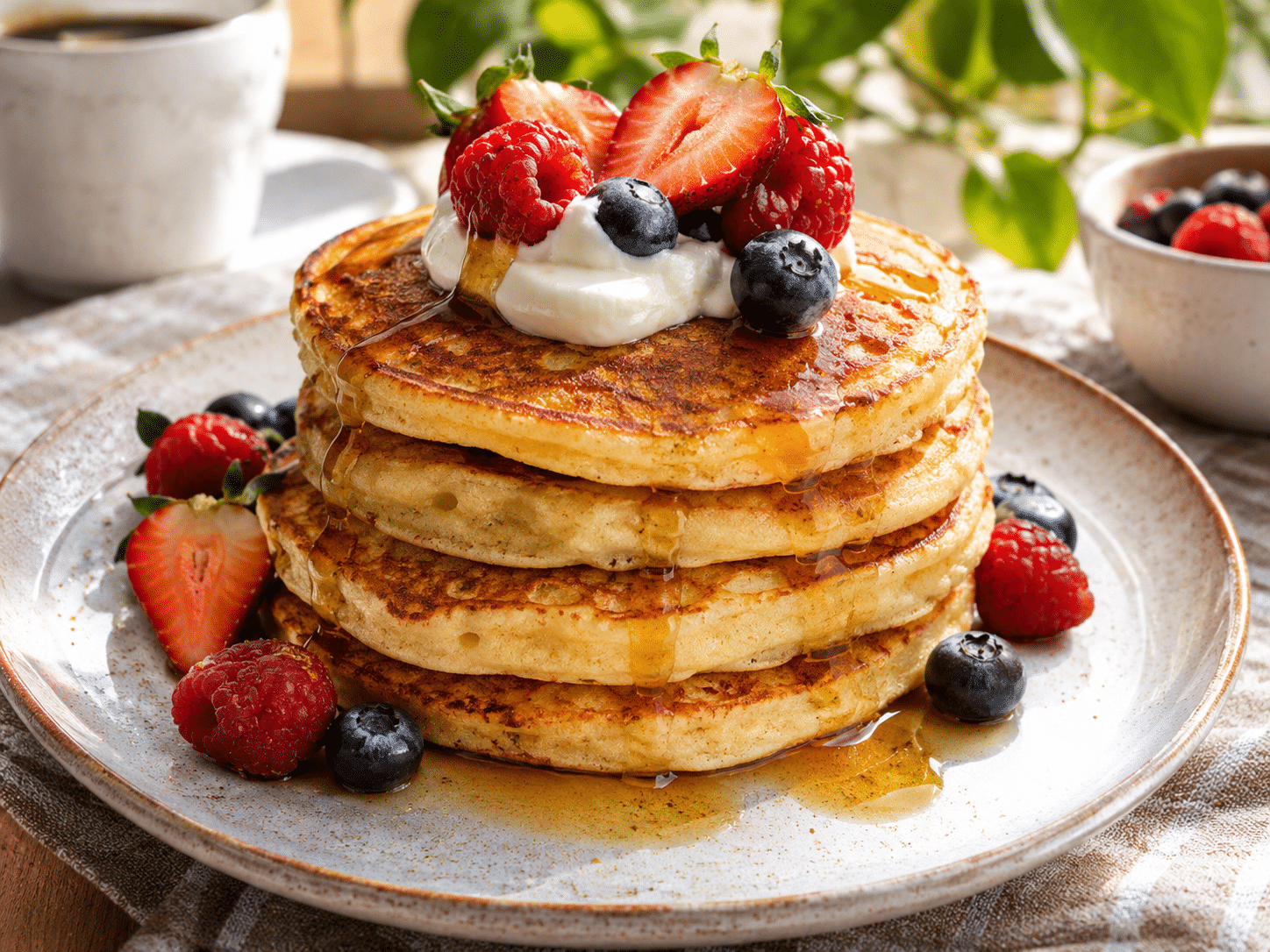
If you’re looking for a delicious breakfast that combines fluffy texture, satisfying flavor, and an extra boost of protein, these High Protein Pancakes with Protein Powder are the perfect way to start your morning. Made with vanilla protein powder, creamy Greek yogurt, and simple pantry ingredients, these homemade pancakes offer a wonderful balance of comfort and nutrition.
Moreover, unlike some protein pancake recipes that turn out dry or rubbery, this version uses milk, Greek yogurt, and an egg to create a softer, more tender texture. As a result, you can enjoy golden, fluffy pancakes while adding more protein to your breakfast routine.
Even better, this easy protein pancake recipe takes just 25 minutes from start to finish. Therefore, it’s ideal for busy weekday mornings, relaxed weekend brunches, or preparing breakfast ahead of time.
Whether you enjoy your pancakes topped with fresh berries, sliced bananas, chopped nuts, or a drizzle of maple syrup, this versatile recipe makes it easy to create a satisfying morning meal.
Additionally, the batter can be customized with different protein powder flavors, making these homemade protein pancakes an excellent choice for anyone who loves variety at breakfast.
What Are High Protein Pancakes with Protein Powder?
High Protein Pancakes with Protein Powder are a variation of traditional American pancakes that incorporate protein-rich ingredients into the batter.
Instead of relying entirely on flour, this recipe combines all-purpose flour with vanilla protein powder and Greek yogurt.
Consequently, the finished pancakes contain additional protein while maintaining the familiar flavor and comforting texture of classic homemade pancakes.
Furthermore, the addition of vanilla extract enhances the sweetness and aroma without requiring large quantities of added sugar.
Unlike recipes made exclusively with protein powder, these pancakes include regular flour, which helps create a more traditional pancake structure.
The History and Popularity of Protein Pancakes
Traditional pancakes have been enjoyed in different forms for centuries, with variations appearing in cultures around the world.
In American cooking, fluffy pancakes became a breakfast staple thanks to ingredients such as flour, milk, eggs, and chemical leavening agents.
Over time, home cooks began experimenting with ingredients that could make pancakes more filling and better suited to different nutritional preferences.
As protein powders became increasingly common in everyday kitchens, they started appearing in breakfast recipes, including smoothies, muffins, oatmeal, and pancakes.
Today, protein pancakes are especially popular among people who want convenient, protein-rich breakfast options without giving up familiar comfort foods.
Additionally, combining protein powder with Greek yogurt has become a practical way to add protein while helping maintain moisture in baked and skillet-cooked recipes.
Why You’ll Love These Fluffy Protein Pancakes
There are several reasons why this easy high protein pancakes recipe deserves a place in your breakfast rotation.
First, it uses familiar ingredients that are easy to find in most grocery stores. Therefore, you won’t need complicated equipment or specialty baking techniques.
Furthermore, the recipe requires only 10 minutes of preparation and approximately 15 minutes of cooking.
Another advantage is the customizable flavor. Vanilla protein powder creates a classic base, while chocolate or berry-flavored varieties offer delicious alternatives.
Additionally, these pancakes can be refrigerated or frozen, making them convenient for meal preparation.
Most importantly, the combination of protein powder, Greek yogurt, milk, and egg creates a satisfying breakfast that can be paired with fruit, nuts, or other nutritious toppings.
High Protein Pancakes Recipe Overview
- Preparation Time: 10 minutes
- Cooking Time: 15 minutes
- Total Time: 25 minutes
- Servings: 4
- Cuisine: American
- Course: Breakfast, Brunch
- Cooking Method: Stovetop Skillet
- Diet: Vegetarian, when made with suitable protein powder
- Difficulty: Easy
- Texture: Fluffy, Soft, and Golden Brown
Ingredients for High Protein Pancakes with Protein Powder
One of the greatest advantages of this recipe is its simple ingredient list. Each ingredient contributes to the pancakes’ flavor, structure, moisture, or protein content.
Dry Ingredients
- 1½ cups all-purpose flour: Provides structure and helps create a traditional fluffy pancake texture.
- ½ cup vanilla protein powder: Adds protein and a pleasant vanilla flavor. Whey, casein, or suitable plant-based protein powders can be used.
- 2 teaspoons baking soda: A leavening ingredient that reacts with acidic components to help the batter rise. This is a relatively large amount for the recipe and may create an alkaline aftertaste.
- 2 teaspoons baking powder: Helps the pancakes rise and develop a light texture.
- 1 pinch salt: Balances sweetness and enhances the other flavors.
Wet Ingredients
- ¼ cup plain full-fat Greek yogurt: Adds protein, moisture, and a slight tanginess.
- 1¼ cups milk: Creates the batter’s consistency and helps combine the dry ingredients.
- 1 large egg: Provides structure and helps bind the pancake batter.
- 2 teaspoons vanilla extract: Enhances the sweet aroma and complements the vanilla protein powder.
- 2 tablespoons olive oil: Adds moisture and helps keep the pancakes tender.
- 1 tablespoon maple syrup, optional: Provides a touch of natural sweetness.
- Non-stick cooking spray, as needed: Prevents sticking and encourages even browning.
Optional Pancake Toppings
- Fresh blueberries, strawberries, or raspberries.
- Sliced bananas or diced apples.
- Plain Greek yogurt for additional protein.
- Chopped almonds, walnuts, or pecans.
- Peanut butter or almond butter.
- A light drizzle of maple syrup.
- Dark chocolate chips or shredded coconut.
How to Make High Protein Pancakes with Protein Powder
Making fluffy homemade protein pancakes is easy when you follow the steps carefully. In particular, avoiding overmixing and maintaining moderate cooking heat will help produce the best results.
Step 1: Combine the Dry Ingredients
First, place a large mixing bowl on your countertop.
Add the all-purpose flour, vanilla protein powder, baking soda, baking powder, and a pinch of salt.
Using a whisk, thoroughly combine the ingredients until they are evenly distributed.
This step is important because it prevents concentrated pockets of protein powder or leavening agents from forming in the batter.
Furthermore, whisking helps break up small lumps and encourages a more consistent pancake texture.
If your protein powder is particularly clumpy, consider sifting it before mixing.
Step 2: Mix the Wet Ingredients
Next, take a separate medium-sized bowl and add the Greek yogurt, milk, egg, vanilla extract, olive oil, and optional maple syrup.
Whisk until the mixture becomes mostly smooth and evenly combined.
The Greek yogurt adds creaminess, while the milk helps create a pourable consistency.
Meanwhile, the egg provides structure, and the olive oil contributes moisture.
As a result, these ingredients work together to balance the drying effect that some protein powders can have during cooking.
Step 3: Prepare the Protein Pancake Batter
Once both mixtures are ready, gradually pour the wet ingredients into the bowl containing the dry ingredients.
Using a whisk or spatula, gently fold everything together until the flour is incorporated.
However, avoid mixing too vigorously or for too long.
Overmixing can develop excess gluten in wheat flour, resulting in pancakes that are dense or chewy rather than light and fluffy.
A few small lumps are completely normal and preferable to an overworked batter.
If the batter appears unusually thick because of your protein powder, add a small splash of milk until it becomes thick but pourable.
Step 4: Heat and Grease the Skillet
Place a large non-stick skillet or griddle over medium heat.
Allow it to warm for approximately one to two minutes.
Next, lightly coat the cooking surface with non-stick cooking spray, a small amount of butter, or additional oil.
For the best results, maintain moderate heat rather than using a very hot skillet.
Protein-enriched batters can brown quickly, so excessive heat may burn the outside before the center cooks completely.
Step 5: Cook the First Side of the Pancakes
Using a measuring cup or ladle, pour approximately ¼ cup of batter onto the heated skillet for each pancake.
Leave enough space between pancakes to make flipping easier.
Cook for approximately 2–3 minutes, watching for small bubbles around the edges and a golden-brown underside.
Additionally, the pancake edges should begin to look slightly set.
Avoid pressing down on the pancakes or moving them repeatedly while they cook.
Instead, allow the batter to rise naturally.
Step 6: Flip and Finish Cooking
Once the underside is golden brown and the edges appear set, carefully slide a spatula underneath the pancake.
Flip it gently and cook the second side for another 2–3 minutes.
The pancake should become golden brown on both sides and feel lightly springy when touched.
If the exterior browns too quickly, reduce the heat slightly.
Continue cooking until the center is set and no raw batter remains.
Repeat with the remaining batter, lightly greasing the skillet between batches when necessary.
Step 7: Serve the Protein Pancakes Warm
Finally, transfer the cooked protein pancakes to serving plates.
Arrange them in a stack and add your favorite toppings.
For example, fresh blueberries, sliced strawberries, and bananas provide natural sweetness and refreshing flavor.
Alternatively, add a spoonful of Greek yogurt and chopped nuts for a more substantial breakfast.
Finish with a small drizzle of maple syrup if desired.
Serve immediately while the pancakes are warm, fluffy, and tender.
Expert Tips for the Best Fluffy Protein Pancakes
Although this recipe is simple, a few practical techniques can significantly improve the final results.
Choose a suitable protein powder. Whey protein often produces a different texture from casein or plant-based powders. Therefore, you may need to adjust the milk slightly depending on the variety.
Avoid overmixing the batter. Gentle mixing helps preserve a soft, fluffy texture.
Cook over medium or medium-low heat. Protein pancakes can brown faster than traditional pancakes, so careful temperature control is important.
Adjust the batter consistency. If your mixture is too thick, gradually add milk until it becomes easy to pour.
Use a non-stick skillet. A properly greased skillet helps the pancakes cook evenly and makes flipping easier.
Check the baking soda quantity. The original recipe uses two teaspoons, which is relatively high for the amount of acidic yogurt. If you notice an alkaline taste, consider testing a reduced amount in a future batch.
Delicious High Protein Pancake Variations
One of the best things about homemade protein pancakes is how easily you can customize the flavor.
For chocolate protein pancakes, replace vanilla protein powder with chocolate-flavored protein powder.
Alternatively, create berry protein pancakes by gently folding fresh blueberries or chopped strawberries into the batter.
If you enjoy richer flavors, add dark chocolate chips or chopped walnuts before cooking.
For a gluten-free version, use a suitable gluten-free all-purpose flour blend instead of wheat flour.
Additionally, you can experiment with plant-based protein powder and dairy-free yogurt, although you may need to adjust the liquid quantities to maintain the correct consistency.
What to Serve with High Protein Pancakes
These fluffy protein pancakes are delicious on their own, but pairing them with complementary ingredients can create an even more satisfying breakfast.
For example, serve them with fresh berries and plain Greek yogurt for added flavor, protein, and freshness.
Alternatively, sliced bananas and peanut butter create a sweet, creamy combination.
If you prefer a savory contrast, pair the pancakes with scrambled eggs or a vegetable omelet.
Furthermore, a bowl of fresh fruit or a smoothie can help round out your breakfast.
For weekend brunch, arrange the pancakes on a serving platter with several toppings so everyone can customize their portion.
Nutritional Information for High Protein Pancakes
These homemade pancakes contain protein from the protein powder, Greek yogurt, milk, and egg.
Additionally, the flour provides carbohydrates, while the olive oil contributes dietary fat.
The original recipe website lists the following estimates, labeled per pancake.
| Nutrient | Original Website Estimate |
|---|---|
| Calories | 250 kcal |
| Protein | 15 g |
| Carbohydrates | 30 g |
| Total Fat | 10 g |
| Fiber | 2 g |
| Sugar | 3 g |
However, these figures are not verified against the actual batter yield. Because the recipe makes four servings and potentially several pancakes per serving, the values should not automatically be treated as accurate for each individual pancake.
Actual nutrition depends on the protein powder brand, milk, pancake size, optional maple syrup, and toppings.
For precise values, calculate the entire recipe using your specific ingredients and divide by the number of servings or pancakes produced.
How to Store and Reheat Protein Pancakes
If you have leftover pancakes, allow them to cool before transferring them to an airtight container.
Store them in the refrigerator for up to three days.
For longer storage, place parchment paper between individual pancakes and transfer them to a freezer-safe bag.
Freeze for up to one month for the best quality.
When you’re ready to eat, reheat refrigerated or frozen pancakes in a toaster, microwave, or warm skillet until heated through.
For a slightly crisp exterior, the toaster or skillet generally produces the best results.
Additionally, storing pancakes in individual portions makes them convenient for busy mornings.
Frequently Asked Questions About High Protein Pancakes with Protein Powder
Can I Put Protein Powder in Pancake Batter?
Absolutely! Protein powder can be added to pancake batter to increase its protein content. However, because protein powder absorbs liquid differently from flour, the batter may require additional milk to maintain a soft, fluffy texture.
What Is the Best Protein Powder for Pancakes?
Vanilla whey protein is a popular option because of its mild flavor and versatility. Nevertheless, casein and plant-based protein powders can also work. Keep in mind that different powders absorb moisture differently, so small adjustments may be necessary.
Why Are My Protein Pancakes Dry or Rubbery?
Protein pancakes can become dry or rubbery when the batter contains too much protein powder, is over-mixed, or is cooked at excessively high temperatures. Therefore, use the recommended proportions, mix gently, and avoid overcooking.
Can I Make High Protein Pancakes Without Greek Yogurt?
Yes. You can substitute regular plain yogurt or a suitable dairy-free yogurt alternative. However, the protein content and batter consistency may change slightly depending on the substitute.
Can I Make These Protein Pancakes Gluten-Free?
Yes! Replace the all-purpose flour with a gluten-free flour blend designed for baking. Additionally, confirm that your protein powder and other packaged ingredients are certified gluten-free if necessary.
Are Protein Pancakes Good for Meal Prep?
Definitely! Protein pancakes are convenient for preparing breakfast in advance. Simply cook a batch, allow the pancakes to cool, and store them in the refrigerator or freezer. Reheat individual portions whenever needed.
How Can I Make Protein Pancakes More Fluffy?
For fluffier pancakes, avoid overmixing the batter, use fresh baking powder, maintain moderate cooking heat, and keep the batter thick but pourable. Additionally, allow the first side to set properly before flipping.
Can I Make Protein Pancakes Without Protein Powder?
Yes, although the resulting pancakes will contain less protein. You can experiment with replacing the protein powder with additional flour, but the liquid and leavening quantities may need adjustment to achieve the right texture.
Conclusion
These High Protein Pancakes with Protein Powder are a delicious way to enjoy a classic breakfast while incorporating more protein-rich ingredients into your morning routine. With vanilla protein powder, creamy Greek yogurt, and simple pantry staples, they offer a satisfying combination of flavor, texture, and convenience.
Furthermore, their fluffy centers, golden-brown edges, and customizable toppings make them appealing for both everyday breakfasts and relaxed weekend brunches.
Whether you serve them with fresh fruit, Greek yogurt, chopped nuts, or a drizzle of maple syrup, these homemade protein pancakes are easy to adapt to your preferences.
Additionally, their quick preparation and freezer-friendly qualities make them a practical option for meal planning.
Ultimately, if you’re searching for an easy high protein pancakes with protein powder recipe that’s fluffy, flavorful, and ready in just 25 minutes, this homemade breakfast is a wonderful addition to your recipe collection.
Check also:
Lemon Chicken Ricotta Meatballs
Chicken and meat easy Recipes
Suggestions:
- Cinnamon Roll Bites Recipe: Easy, Soft and Delicious
- Moist Chocolate Banana Bread Recipe with Chocolate Chips
- High Protein Pancakes with Protein Powder: Fluffy and Easy
- Air Fryer Sweet Potatoes: Easy Crispy and Healthy Recipe
- Club Sandwich Pasta Salad: Easy Creamy Lunch Recipe