


Share
Introduction
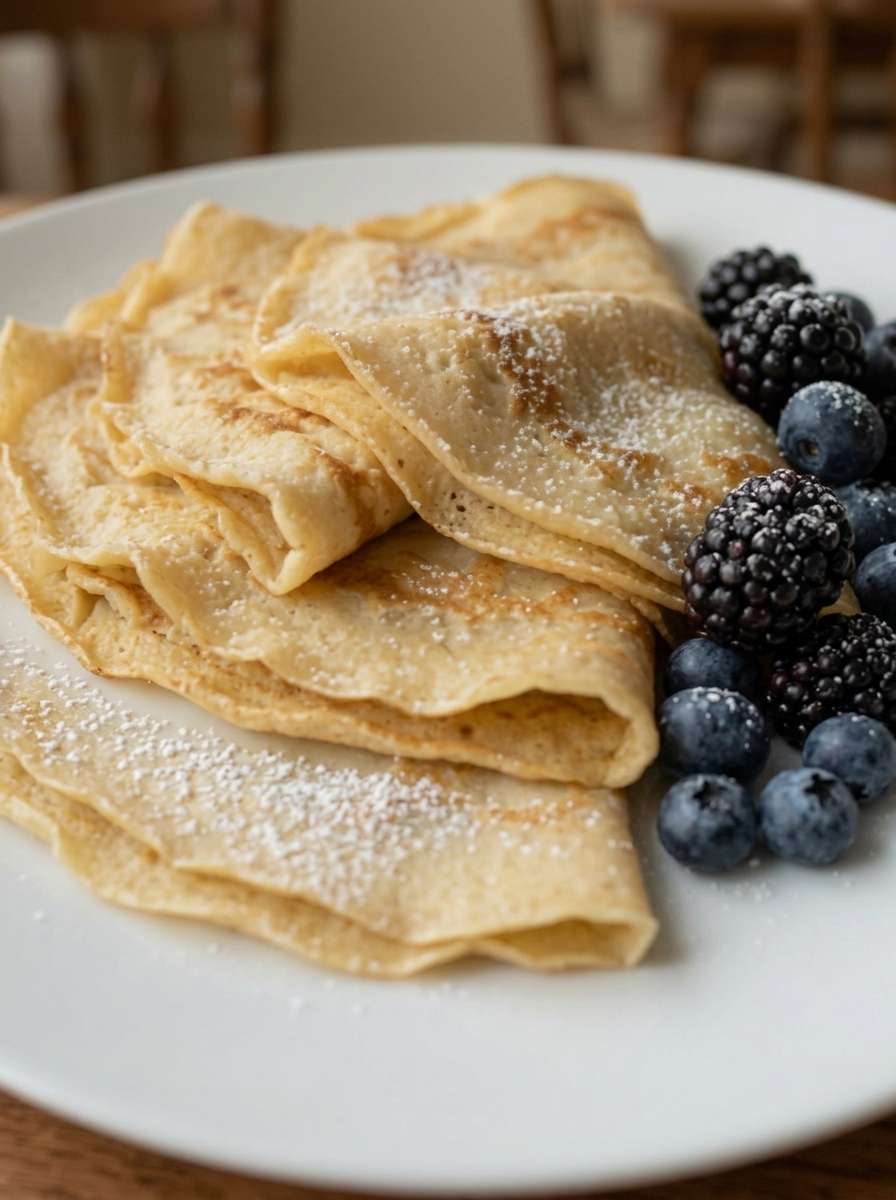
These Sugar-Free Almond Flour Crepes are thin, soft, delicate, and perfect for anyone who wants a lighter low-carb version of classic crepes. They are made with simple ingredients, including eggs, unsweetened almond milk, finely sifted almond flour, coconut flour, powdered allulose, vanilla flavor, and a small pinch of salt. As a result, the crepes turn out flexible, lightly golden, and easy to fold.
Unlike traditional crepes made with wheat flour and sugar, this recipe keeps the texture tender while reducing carbs. Therefore, it is a wonderful choice for breakfast, brunch, dessert, or even a simple snack. You can serve them plain, fold them into quarters, or fill them with sugar-free whipped cream, berries, nut butter, Greek yogurt, or a savory filling.
Moreover, these crepes are pan-cooked, quick to prepare, and beginner-friendly when you follow the right method. The batter rests for 10 minutes so the almond flour and coconut flour can absorb moisture. Then, each crepe cooks quickly in an 8-inch non-stick skillet with just a light brush of melted butter.
Because almond flour and coconut flour behave differently from regular flour, the technique matters. However, once you learn to stir the batter before each pour, use exactly 3 tablespoons of batter, and swirl the pan immediately, the process becomes simple and reliable.
If you are looking for a sugar-free crepe recipe that works for everyone at the table, this almond flour version is a beautiful option.
History and Information About Crepes
Crepes are a traditional French-style thin pancake known for their delicate texture and versatile fillings. They are usually made with flour, eggs, milk, butter, and a small amount of sugar or salt. Over time, crepes became popular around the world because they can be served sweet or savory, making them suitable for breakfast, lunch, dinner, or dessert.
Classic crepes are often filled with jam, chocolate spread, whipped cream, fruit, cheese, ham, mushrooms, or eggs. In France, they are especially associated with family meals, street food stands, and special occasions. However, their simple preparation also makes them easy to adapt for different diets and preferences.
This sugar-free almond flour version keeps the same spirit of traditional crepes but uses low-carb ingredients. Almond flour replaces most of the wheat flour, while coconut flour helps absorb moisture and gives the batter better structure. Because almond flour does not contain gluten, the crepes are more delicate than traditional ones. For that reason, eggs play an important role in holding everything together.
Additionally, powdered allulose adds a touch of sweetness without regular sugar. Unsweetened almond milk keeps the batter light, while vanilla flavor gives the crepes a gentle aroma. Although this recipe is different from classic French crepes, it still delivers the soft, thin, foldable texture people love.
In other words, these almond flour crepes are a modern low-carb adaptation of a timeless recipe. They are simple, elegant, and easy to pair with many toppings.
Ingredients
For the crepe batter:
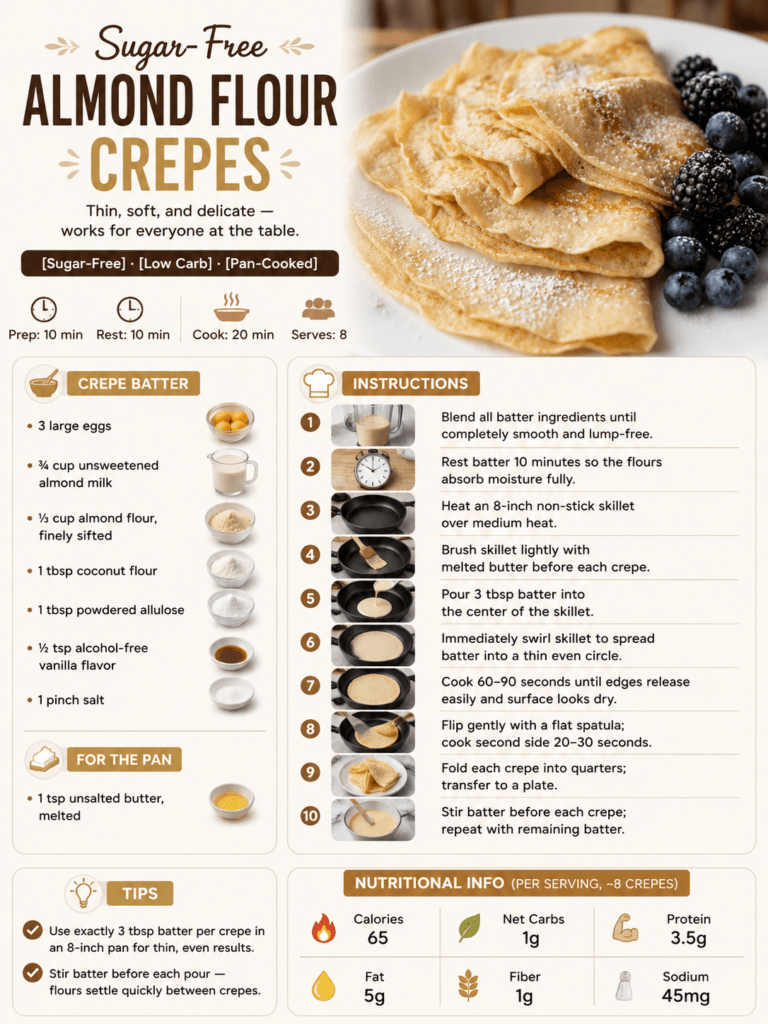
- 3 large eggs
- 3/4 cup unsweetened almond milk
- 1/3 cup almond flour, finely sifted
- 1 tablespoon coconut flour
- 1 tablespoon powdered allulose
- 1/2 teaspoon alcohol-free vanilla flavor
- 1 pinch salt
For the pan:
- 1 teaspoon unsalted butter, melted
Preparation Step by Step
Step 1: Blend the Crepe Batter Until Smooth
Add the eggs, unsweetened almond milk, finely sifted almond flour, coconut flour, powdered allulose, vanilla flavor, and salt to a blender. Blend until the batter is completely smooth and lump-free.
This step is important because almond flour can sometimes create small lumps if it is not mixed well. Blending gives the batter a smoother texture, which helps the crepes cook evenly. Additionally, sifting the almond flour before blending creates a finer batter and a more delicate final crepe.
The finished batter should look thin, pourable, and slightly creamy. It will not look exactly like wheat flour crepe batter, but it should still spread easily in the pan.
Step 2: Rest the Batter for 10 Minutes
After blending, let the batter rest for 10 minutes. During this time, the almond flour and coconut flour absorb moisture from the eggs and almond milk.
This resting step improves the texture of the crepes. Without resting, the batter may be too loose at first, and the crepes may tear more easily. Coconut flour absorbs liquid quickly, so giving it time to hydrate helps the batter become more balanced.
Before cooking, stir the batter gently. Since low-carb flours can settle at the bottom, stirring keeps the texture consistent from the first crepe to the last.
Step 3: Heat the Non-Stick Skillet
Place an 8-inch non-stick skillet over medium heat. Allow it to warm evenly before adding the batter.
The pan should be hot enough to cook the crepe gently but not so hot that the batter sets before you can swirl it. If the pan is too cold, the crepe may stick or cook unevenly. On the other hand, if the pan is too hot, the crepe may brown too quickly and become dry.
A good test is to add a tiny drop of batter to the pan. If it lightly sizzles and sets within a few seconds, the skillet is ready.
Step 4: Brush the Pan with Melted Butter
Lightly brush the skillet with melted unsalted butter before each crepe. You only need a thin coating.
The butter helps prevent sticking and adds a soft, rich flavor. However, avoid using too much butter, because excess butter can make the batter slide unevenly in the pan. A light brush is enough to create a smooth cooking surface.
If needed, use a pastry brush or folded paper towel to spread the butter thinly across the skillet.
Step 5: Pour the Batter into the Pan
Pour exactly 3 tablespoons of batter into the center of the skillet. This amount works well for an 8-inch pan and helps create thin, even crepes.
Using too much batter can make the crepes thick and harder to fold. Using too little can make them fragile. Therefore, measuring the batter is one of the easiest ways to get consistent results.
As soon as the batter hits the pan, move quickly to the next step.
Step 6: Swirl the Skillet Immediately
Immediately lift and swirl the skillet so the batter spreads into a thin, even circle. Tilt the pan in different directions until the bottom is covered.
This step should be done quickly because the batter starts to cook as soon as it touches the hot skillet. If you wait too long, the crepe may set before it spreads, creating thick edges or uneven patches.
A thin crepe cooks more evenly and folds more beautifully. Therefore, gentle but fast swirling is the key to a delicate texture.
Step 7: Cook the First Side
Cook the crepe for 60 to 90 seconds, or until the edges release easily and the surface looks dry.
You will know the crepe is ready to flip when the edges begin to lift slightly from the pan. The top should no longer look wet, and the bottom should be lightly golden.
Avoid flipping too early, because almond flour crepes are delicate. Waiting until the surface looks dry makes the crepe stronger and easier to turn.
Step 8: Flip the Crepe Gently
Using a flat spatula, gently lift and flip the crepe. Cook the second side for 20 to 30 seconds.
The second side cooks faster than the first, so keep an eye on it. You only need enough time to set the crepe and lightly finish the surface.
If the crepe tears, do not worry. The first crepe is often a test crepe, especially when working with low-carb batter. Adjust the heat slightly if needed and continue with the next one.
Step 9: Fold and Transfer to a Plate
Once cooked, fold each crepe into quarters and transfer it to a plate.
Folding the crepes while they are still warm helps them keep a soft shape. You can stack them gently on a plate as you cook the remaining batter.
If you prefer to fill the crepes, you can leave them flat and add the filling later. However, folding them into quarters creates a classic and elegant presentation.
Step 10: Stir the Batter and Repeat
Before making each crepe, stir the batter again. Almond flour and coconut flour settle quickly, so this step helps keep every crepe consistent.
Brush the pan lightly with butter, pour 3 tablespoons of batter, swirl, cook, flip, and repeat until all the batter is used.
With practice, the process becomes smooth and quick. By the final crepe, you will have a stack of soft, thin, sugar-free almond flour crepes ready to serve.
Helpful Tips for the Best Almond Flour Crepes
For thin and even crepes, use exactly 3 tablespoons of batter in an 8-inch non-stick skillet. This amount creates the right balance between softness and structure.
Also, stir the batter before each pour. Almond flour and coconut flour settle quickly, and stirring prevents the last crepes from becoming thicker or grainier than the first ones.
In addition, use medium heat rather than high heat. Low-carb crepes are more delicate than traditional crepes, so gentle cooking helps prevent tearing and over-browning.
Furthermore, make sure the almond flour is finely sifted. A finer texture gives smoother crepes and helps the batter spread more evenly.
Finally, let the batter rest for the full 10 minutes. Although this may seem like a small step, it makes the crepes easier to cook and improves the final texture.
Serving Ideas
These Sugar-Free Almond Flour Crepes can be served in many delicious ways. For a sweet breakfast, fill them with sugar-free whipped cream and fresh berries. You can also add Greek yogurt, almond butter, peanut butter, or a light dusting of powdered allulose.
For a dessert-style crepe, try adding sugar-free chocolate drizzle, lemon cream, cinnamon, or a spoonful of low-carb berry sauce. Because the crepes are lightly flavored with vanilla, they pair well with many sweet toppings.
However, you can also make them savory by leaving out the vanilla and allulose. Then, fill them with cream cheese, smoked salmon, eggs, mushrooms, spinach, or shredded chicken. This makes the recipe even more flexible for different meals.
Nutritional Information
The following nutritional values are approximate and based on 8 crepes:
- Calories: about 65 per crepe
- Net Carbs: about 1g
- Protein: about 3.5g
- Fat: about 5g
- Fiber: about 1g
- Sodium: about 45mg
Nutrition may vary depending on the exact almond flour, almond milk, sweetener, and butter used. For the most accurate values, calculate the recipe with the specific brands in your kitchen.
FAQ
Can I Make These Sugar-Free Almond Flour Crepes Ahead of Time?
Yes, you can make these crepes ahead of time. After cooking, let them cool completely, then stack them with parchment paper between each crepe. Store them in an airtight container in the refrigerator for up to 3 days.
Why Do I Need to Rest the Batter?
Resting the batter allows the almond flour and coconut flour to absorb moisture. As a result, the batter becomes more stable, and the crepes are easier to cook. This step also helps reduce tearing.
Can I Use Only Almond Flour Without Coconut Flour?
It is not recommended for this exact recipe. Coconut flour absorbs moisture and helps give the crepes structure. Without it, the batter may be too thin and the crepes may tear more easily.
Can I Make These Crepes Dairy-Free?
Yes, the crepe batter itself is dairy-free if you use almond milk and skip butter. For the pan, replace the melted butter with a neutral oil or dairy-free butter alternative. The texture may change slightly, but the recipe can still work.
Why Are My Almond Flour Crepes Breaking?
Crepes may break if the pan is too hot, the batter has not rested, or the crepe is flipped too early. Wait until the surface looks dry and the edges release easily before flipping. Also, stir the batter before each pour for a consistent texture.
Can I Freeze Almond Flour Crepes?
Yes, you can freeze them. Place parchment paper between each crepe, then store them in a freezer-safe bag or container. Thaw them in the refrigerator and reheat gently in a skillet before serving.
What Is the Best Pan Size for This Recipe?
An 8-inch non-stick skillet is best for this recipe. It allows 3 tablespoons of batter to spread into a thin, even circle. A larger pan may make the crepes too thin and fragile, while a smaller pan may make them too thick.
Are These Crepes Low Carb?
Yes, these crepes are low carb, with about 1g net carb per crepe. Since they are made with almond flour, coconut flour, almond milk, and allulose, they are a great option for a low-carb breakfast or dessert.
Conclusion
These Sugar-Free Almond Flour Crepes are soft, thin, delicate, and easy to enjoy with both sweet and savory toppings. They offer the elegance of classic crepes while using low-carb ingredients and no regular sugar.
Moreover, the recipe is simple once you follow the right technique. Blend the batter until smooth, rest it for 10 minutes, use an 8-inch non-stick skillet, measure 3 tablespoons of batter per crepe, and stir before each pour. These small details make a big difference in texture and consistency.
Whether you serve them for breakfast, brunch, dessert, or a light snack, these almond flour crepes are a versatile recipe worth keeping. They are quick, flexible, and delicious enough for everyone at the table.
Check also:
Lemon Chicken Ricotta Meatballs
Chicken and meat easy Recipes
Suggestions:
- Crispy Garlic Parmesan Fries Baked to Golden Perfection
- Creamy Tomato and Roasted Red Pepper Fusilli Recipe
- Juicy Grilled Beef Kofta Recipe with Creamy Yogurt Sauce
- Easy Ground Beef Fried Rice with Mixed Vegetables Recipe
- Moist Date and Walnut Loaf with Honey Glaze Recipe